
Home » News » How to Make Floating Fish Feed at Home: Beginner’s Guide to Small Feed Pellet Machines
Beginner’s Guide to Small Feed Pellet Machines
For small fish farms, backyard aquaculture, trial feed production, and local pond farming, making fish feed at home can sound like a practical idea. It gives farmers better control over raw materials, formula, pellet size, feeding schedule, and long-term feed cost.
But there is one important point many buyers miss: floating fish feed is different from ordinary feed pellets.
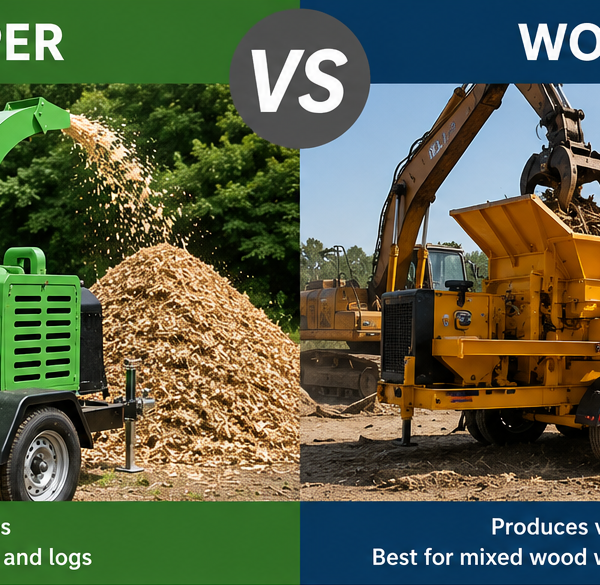
A small feed pellet machine can press powder materials into pellets. However, if you want the pellets to float on water, you usually need a floating fish feed extruder, not only a standard flat die pellet machine.
This difference matters. If the wrong machine is selected, the pellets may sink quickly, break in water, or fail to meet the feeding needs of tilapia, catfish, ornamental fish, or other aquaculture species.
Why Small Fish Farms Make Their Own Feed
Feed cost is one of the main operating costs in aquaculture. Many small farms depend on finished feed from local suppliers, but price changes, delivery delays, unstable formula, and transportation costs can create pressure.
By producing fish feed on-site, farmers can use local raw materials such as corn flour, soybean meal, fish meal, rice bran, wheat bran, oil cake, vitamins, minerals, and other protein sources. This gives more flexibility, especially in regions where commercial fish feed is expensive or difficult to obtain.
Floating fish feed has another practical benefit. Farmers can observe feeding behavior more easily. If pellets float on the surface, it is easier to see whether the fish are eating actively, whether too much feed has been added, and whether the pond water may be affected by waste feed.
For small aquaculture projects, this is not a small detail.
Can a Small Feed Pellet Machine Make Floating Fish Feed?
In most cases, a standard flat die feed pellet machine is better for sinking feed pellets.
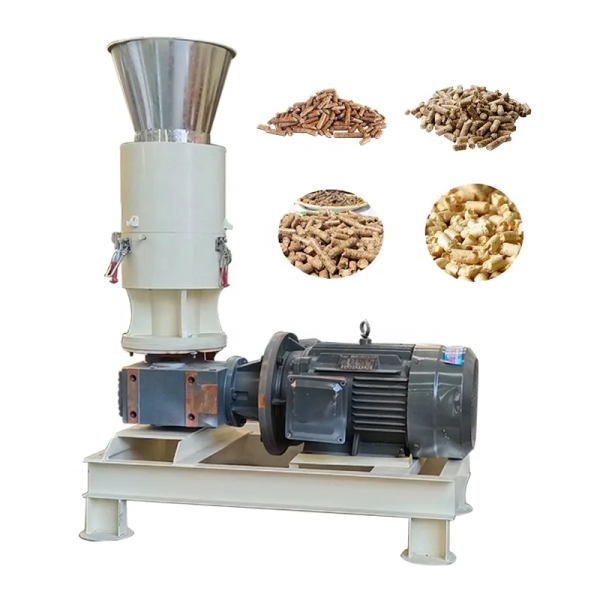
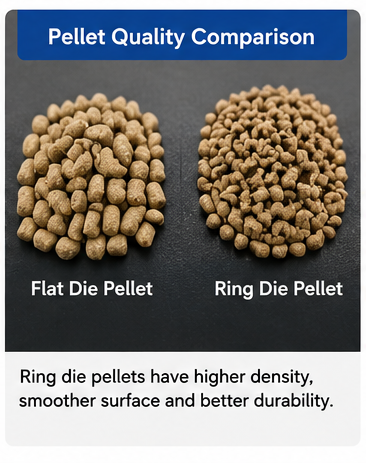
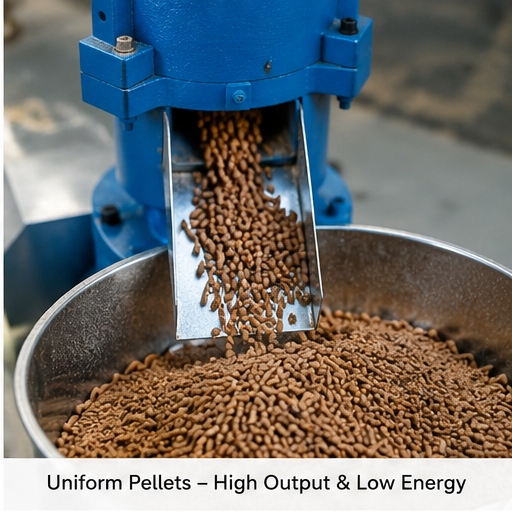
A flat die pellet machine uses pressure from the die and rollers to compress feed powder into dense pellets. These pellets usually sink in water because they do not have the expanded porous structure needed for floating.
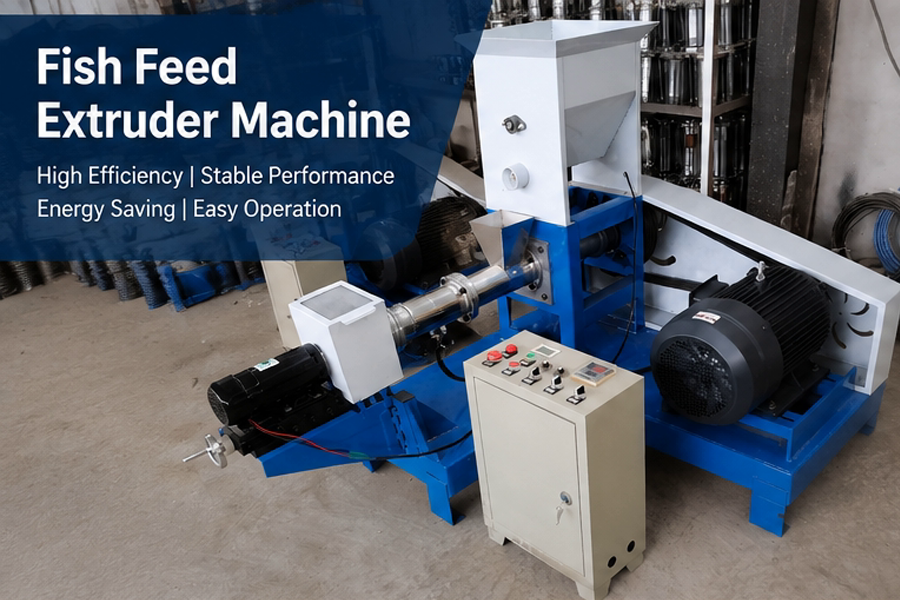
Floating fish feed normally requires extrusion. A fish feed extruder processes the material under high temperature, pressure, and screw extrusion. When the material exits the die, it expands and forms a lighter pellet structure. This helps the feed float on water.
So, if the buyer only needs sinking fish feed, a small feed pellet machine may be acceptable. If the buyer wants real floating fish feed, a small floating fish feed extruder is the better choice.
When sending an inquiry, it is better to say:
“I want to make floating fish feed for tilapia or catfish.”
“I need a small floating fish feed extruder.”
“My required pellet diameter is 2mm, 3mm, 4mm, or 6mm.”
This helps the supplier recommend the right machine instead of a general livestock pellet mill.
Basic Process for Making Floating Fish Feed
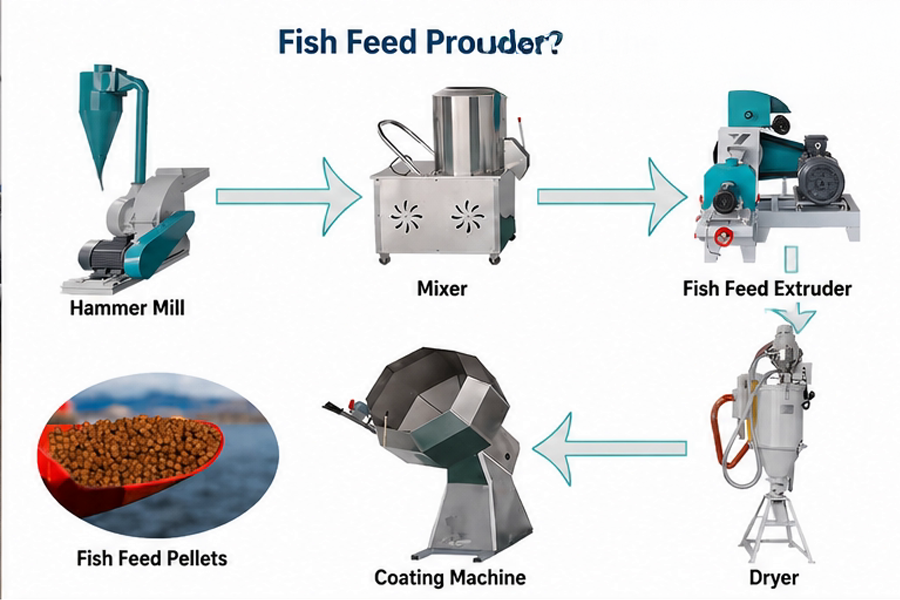
The process starts with grinding. Raw materials such as corn, soybean meal, fish meal, rice bran, and other ingredients should be ground into fine powder. If the material is too coarse, the pellets may have a rough surface and unstable floating performance.
Then the materials need to be mixed evenly. Protein sources, energy materials, vitamins, minerals, and additives should be distributed uniformly. Poor mixing can lead to uneven nutrition and unstable feed quality.
Moisture adjustment is also important. Floating fish feed usually needs proper moisture before extrusion. If the material is too dry, expansion may be poor. If it is too wet, the pellets may become soft, sticky, or difficult to dry.
After mixing and moisture adjustment, the material enters the fish feed extruder. The screw pushes the material forward, and the feed is cooked, compressed, extruded, expanded, and cut into pellets.
The final step is drying and cooling. Fresh extruded fish feed contains heat and moisture. It should not be packed immediately. Proper drying helps improve storage life, reduce mold risk, and maintain pellet stability.
Small Feed Pellet Machine vs Fish Feed Extruder
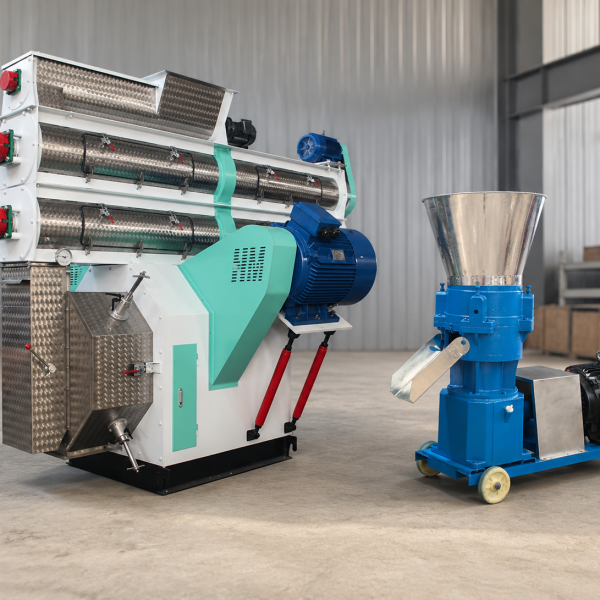
A small feed pellet machine is simple, affordable, and easy to operate. It is suitable for small farms, livestock feed pellets, poultry feed pellets, and some sinking fish feed applications. It has a compact structure and low investment cost.
But it is not the best machine for floating fish feed.
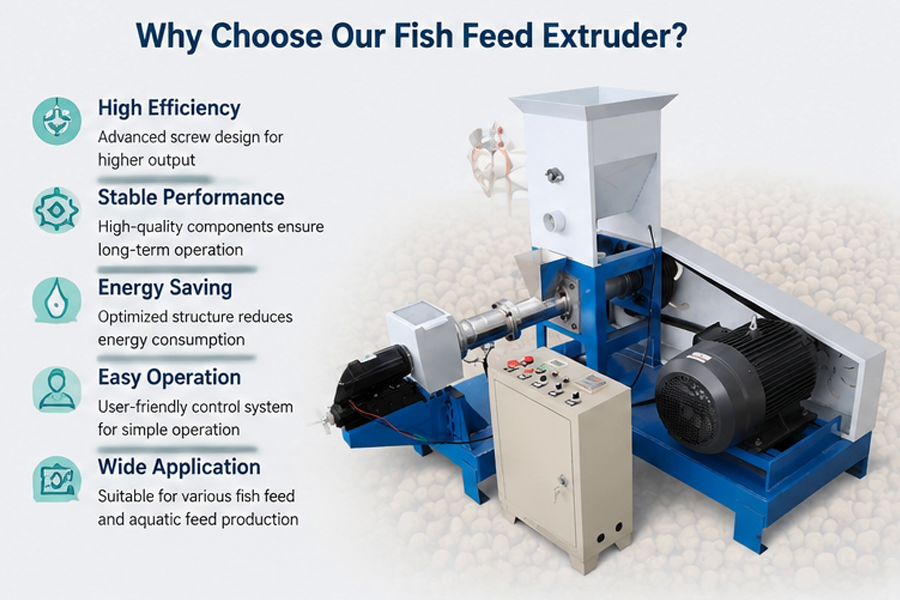
A floating fish feed extruder is designed for aquaculture feed. It can produce expanded pellets with better floating ability and water stability. This makes it more suitable for tilapia, catfish, ornamental fish, and small fish farming projects.
The investment cost of a fish feed extruder is usually higher than a basic pellet machine. It also requires better raw material preparation, moisture control, and operation. But if the customer wants floating feed, the extruder is the more correct choice.
In simple words: choose a small pellet machine for sinking feed and low-cost pellet production. Choose a fish feed extruder for floating fish feed.
Key Points Before Buying a Small Fish Feed Machine
Before buying, confirm the fish species first. Tilapia, catfish, carp, ornamental fish, and young fish may need different pellet sizes and feed structures.
Then confirm the required capacity. A small family pond may only need a low-output machine. A small fish farm may need 80–150 kg/h. A local feed processing business may need a larger production line.
Pellet diameter is another important detail. Common fish feed pellets may range from 1mm to 8mm. Small fish need smaller pellets. Adult fish can use larger pellets. Different dies are required for different pellet sizes.
Raw material formula also affects the result. Starch content helps expansion. Too much oil may reduce floating performance. High fiber materials may affect output and pellet quality. The supplier should understand your raw materials before recommending a model.
Power supply should also be confirmed. Overseas customers need to provide voltage, frequency, single-phase or three-phase power, and local electricity conditions. In some regions, diesel engine options may be more practical.
Common Buying Mistakes
The most common mistake is asking only for the cheapest machine. A low-price machine may look attractive, but if it cannot produce floating pellets, it is not suitable for the project.
Another mistake is ignoring the supporting equipment. A fish feed extruder usually needs a grinder, mixer, dryer, and sometimes a cooler or packing machine. Without proper grinding and mixing, pellet quality will not be stable.
Some buyers also forget to ask about spare parts. Screws, sleeves, dies, cutters, and other wearing parts need replacement after long-term use. Spare parts price and delivery time should be checked before ordering.
Floating time is also not determined by the machine alone. It is affected by formula, starch content, moisture, extrusion temperature, die design, drying level, and pellet size. A professional supplier should help the customer adjust both machine configuration and production process.
Suitable Applications
Small floating fish feed machines are suitable for backyard aquaculture, small fish ponds, tilapia farms, catfish farms, ornamental fish feed production, aquaculture cooperatives, small feed processing workshops, and feed formula testing projects.
For beginners, it is often better to start with a small-capacity fish feed extruder, test the formula and floating performance, and then consider a larger fish feed production line when the project becomes stable.
A complete small floating fish feed line may include a grinder, mixer, extruder, dryer, cooler, screener, and packing machine.
Final Recommendation
If you want to make simple sinking feed pellets, a small feed pellet machine may be enough.
If you want to make real floating fish feed, especially for tilapia, catfish, or aquaculture projects where floating time matters, a small fish feed extruder is the better choice.
The right machine should match your fish species, raw materials, pellet size, required capacity, power supply, labor skill, and budget. Buying the cheapest machine is not always economical if it cannot produce the feed your farm actually needs.
CTA
If you are planning to make floating fish feed at home, on a small farm, or for a local aquaculture project, send us your fish species, raw materials, required capacity, pellet diameter, voltage, and budget range.
Our technical team can help you choose between a small feed pellet machine, a floating fish feed extruder, or a complete small fish feed production line according to your real production needs.