
Home » News » How to Start an Oil Mill Business with a Small Investment
How to Start an Oil Mill Business with a Small Investment
Introduction
Five years ago, many people believed edible oil production was only for large factories.Today, things look very different.
Across Africa, Southeast Asia, South Asia, and parts of Latin America, small oil processing businesses are appearing in rural towns, farming communities, and local markets.
Some are started by farmers.Some are started by family-owned grocery stores.
Others are launched by first-time entrepreneurs looking for a business that converts locally available crops into higher-value products.
One reason is simple: The raw materials already exist.Sunflower seeds, peanuts, sesame seeds, soybean, coconut, palm kernels, mustard seeds, and other oil-bearing crops are widely available in many developing countries.
Instead of selling raw crops at low prices, entrepreneurs are processing them locally and selling cooking oil directly to consumers.The challenge is not whether the opportunity exists.
The challenge is understanding how much investment is actually required and which equipment should be purchased first.
Why Small Oil Mills Are Growing Fast
Small-scale oil processing offers several advantages that attract first-time entrepreneurs.
Local Raw Materials
Most agricultural regions already have oil-bearing crops.
Transportation costs are lower when processing happens close to farms.
Daily Cash Flow
Unlike seasonal crops, edible oil can be sold throughout the year.
Many operators generate cash flow every day instead of waiting for harvest seasons.
Simple Equipment Structure
Modern small oil press machines require limited installation work and can often be operated after basic training.
Growing Demand for Fresh Oil
Consumers increasingly prefer freshly pressed oil over mass-produced alternatives.
In many regions, locally pressed oil sells at a premium price.
How Much Money Do You Really Need?
A common question from first-time buyers is: “Do I need tens of thousands of dollars to start?”
Not necessarily. The investment depends on your production target.
Entry-Level Setup
Suitable for:
- Rural entrepreneurs
- Women’s cooperatives
- Small family businesses
Typical equipment:
- Small screw oil press
- Simple filter
- Seed roasting unit
- Estimated capacity: 50-100 kg/hour
This type of setup is often enough to supply local markets.
Growth-Oriented Setup
Suitable for:
- Agricultural cooperatives
- Existing food traders
- Grocery shop owners
Equipment may include:
- Seed cleaner
- Roaster
- Screw oil press
- Vacuum oil filter
- Capacity:200-500 kg/hour
This allows commercial sales to retailers and distributors.
Semi-Industrial Setup
Suitable for:
- Regional oil brands
- Wholesale suppliers
Equipment:
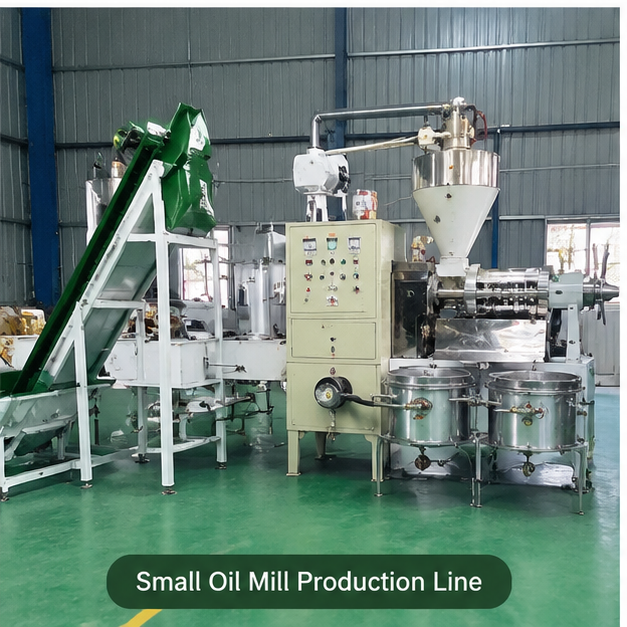
- Automatic feeding system
- Multiple oil presses
- Continuous filtration
- Capacity:1-5 tons/day
This stage requires higher investment but offers better production efficiency.
Choosing the Right Oil Press Machine
Many new buyers focus only on machine price. Experienced operators usually focus on profitability. The cheapest machine is not always the least expensive option.
Screw Oil Press Machine
Most popular choice for startups.
Suitable for:
- Peanut
- Sesame
- Soybean
- Sunflower
- Mustard seed
Advantages:
- Continuous production
- Higher output
- Lower labor requirements
- Easier maintenance
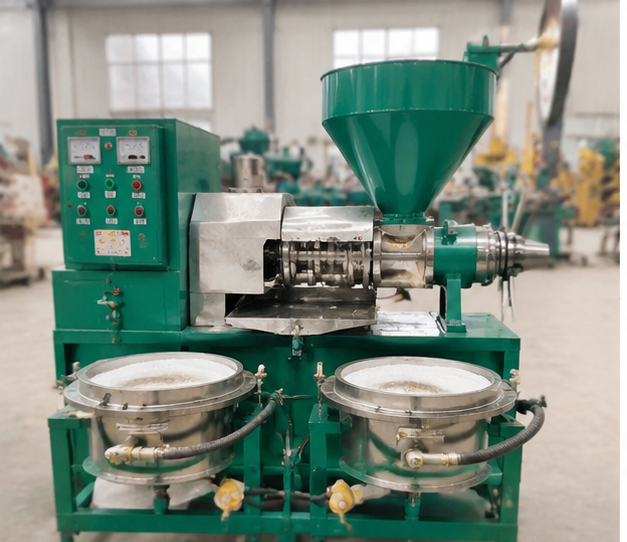
Ideal for entrepreneurs seeking stable production and faster return on investment.
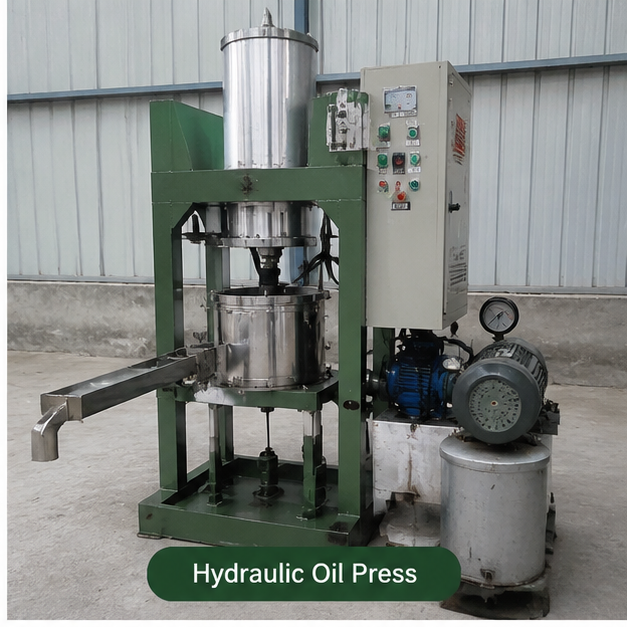
Hydraulic Oil Press
Often selected for premium oils.
Suitable for:
- Sesame oil
- Black seed oil
- Flaxseed oil
Advantages:
- Better aroma retention
- Lower pressing temperature
- Premium oil quality
Limitation:
- Lower output
For businesses targeting high-end markets, hydraulic presses can create added value.
Product Comparison: Which One Makes More Sense?
| Item | Screw Oil Press | Hydraulic Oil Press |
| Output | High | Low |
| Production Mode | Continuous | Batch |
| Labor Requirement | Lower | Higher |
| Maintenance | Simple | Moderate |
| Startup Cost | Lower | Moderate |
| Premium Oil Production | Good | Excellent |
For most first-time entrepreneurs, screw oil presses remain the most practical starting point.
Real Startup Scenario 1
A customer in Tanzania started with: One 6YL series oil press; One small filter
Raw material: Peanuts from local farmers.
The customer initially sold oil in recycled containers to nearby villages.Within eight months, demand exceeded production capacity.A second oil press was added.
The business eventually expanded into branded bottled oil. The biggest lesson: Start with equipment that can be upgraded later.
Real Startup Scenario 2
A women’s cooperative purchased a compact sesame oil production unit. The objective was not industrial production. Instead, they focused on: Cold-pressed sesame oil; Local retail sales; Community employment
The project created income opportunities for more than twenty families. Their challenge was electricity instability. The solution involved a diesel-engine-driven oil press.
Power interruptions no longer affected production schedules.
Purchasing Risks First-Time Buyers Often Ignore
Many equipment failures are not caused by the machine itself. They result from incorrect purchasing decisions.
Risk 1: Wrong Voltage Selection
This is one of the most common export issues.
Examples:
- Nigeria: 415V 50Hz
- Kenya: 415V 50Hz
- Philippines: 220V 60Hz
- Mexico: 220V/440V 60Hz
Incorrect motor configuration can cause:
- Reduced output
- Motor overheating
- Frequent shutdowns
Professional manufacturers verify voltage specifications before production begins.
Risk 2: Ignoring Spare Parts
Some buyers only compare machine prices. They forget replacement parts.
Wear components such as:
- Press screws
- Press rings
- Bearings
should be purchased together with the machine. This reduces downtime later.
Risk 3: Buying Oversized Equipment
Many startups overestimate production demand.
Large equipment means: Higher electricity costs
More raw material inventory
Longer payback periods
Starting with moderate capacity often produces healthier cash flow.
FAT Testing Before Shipment
Experienced importers often request FAT testing before shipment. Factory Acceptance Testing usually includes:
- No-load operation
- Full-load operation
- Oil extraction testing
- Motor current testing
- Noise inspection
- Video records are commonly provided.
Some customers also request:
- Third-party inspection
- CE documentation
- IEC-compliant motors
This process reduces uncertainty before international shipment.
Export Packaging Experience
Oil press machines often travel thousands of kilometers before reaching customers. Good packaging matters.
Professional export packaging typically includes:
- Fumigation-free plywood cases
- Waterproof protection
- Steel reinforcement
- Shock-resistant fixing
For landlocked countries, additional spare parts are often shipped together because replacement deliveries may take months.
How to Expand After the First Year
Successful oil mill owners rarely begin with a complete production line. Most expansion follows three stages.
Stage 1
Sell bulk oil locally.
Stage 2
Introduce branded packaging.
Stage 3
Add filtration and bottling systems.
Many successful businesses start with one oil press machine and gradually evolve into regional brands.
FAQ
Can I start with a single oil press machine?
Yes. Many successful oil businesses begin with one machine and expand later.
How much space is required?
A small workshop of 30-50 square meters is often sufficient for startup operations.
Can the machine run on diesel power?
Yes. Many oil presses can be configured with diesel engines where electricity is unreliable.
How long does delivery take?
Most standard models can be manufactured within 7-15 working days. Sea transportation depends on destination country and shipping route.
Call To Action
Starting an oil mill business does not require a large factory or a massive budget. The key is selecting equipment that matches your raw materials, local power conditions, and production goals.
If you are planning to start a peanut oil, sesame oil, sunflower oil, or soybean oil business, send us the following information:
- Raw material type
- Expected daily production
- Local voltage
- Target market
Our engineering team can recommend a suitable machine configuration, provide FAT testing videos, and help you calculate the investment required for your project before placing an order.