
Home » News » What’s the Difference Between a Wood Chipper and a Wood Grinder?
What’s the Difference Between a Wood Chipper and a Wood Grinder?
Why Buyers Often Confuse Wood Chippers and Wood Grinders
A surprising number of buyers use the terms wood chipper and wood grinder interchangeably.
From a distance, the machines appear similar.
Both process wood waste.
Both reduce material size.
Both are used in biomass, forestry, recycling, and landscaping industries.
Yet choosing the wrong machine can create serious production problems.
Several years ago, a customer operating a wood recycling center in Eastern Europe contacted our factory.
Their goal was straightforward:
Convert mixed wood waste into feedstock for a biomass pellet plant.
The customer initially requested a large wood chipper.
After discussing their raw material, we discovered the feedstock included:
- Construction wood waste
- Pallets
- Demolition timber
- Tree roots
- Mixed wood debris
A chipper was not the ideal solution.
A wood grinder ultimately proved far more suitable.
The lesson is simple: The material you process often determines the machine you need.
A Common Purchasing Mistake in Wood Recycling Projects
Many buyers focus on machine capacity.
They compare:
- 10 tons per hour
- 15 tons per hour
- 20 tons per hour
- Capacity matters.
However, capacity means little if the machine cannot efficiently process the incoming material.
One of the most common mistakes is selecting equipment based solely on output figures without evaluating:
- Feedstock condition
- Contamination levels
- Moisture content
- Desired final product
Before comparing specifications, buyers should understand how these machines work differently.
How Wood Chippers Process Material
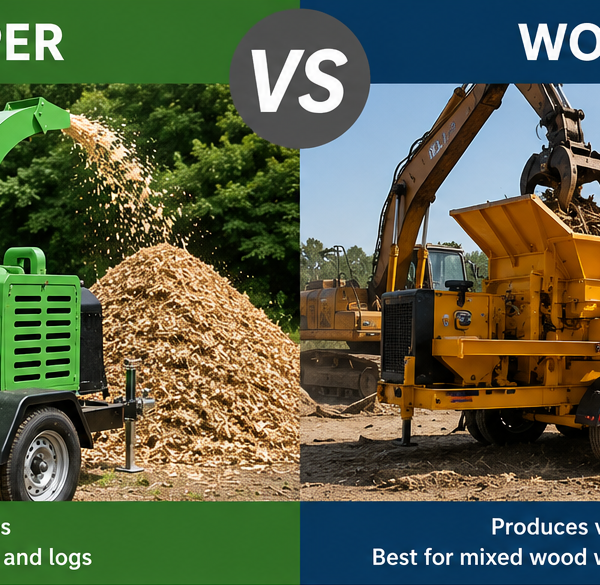
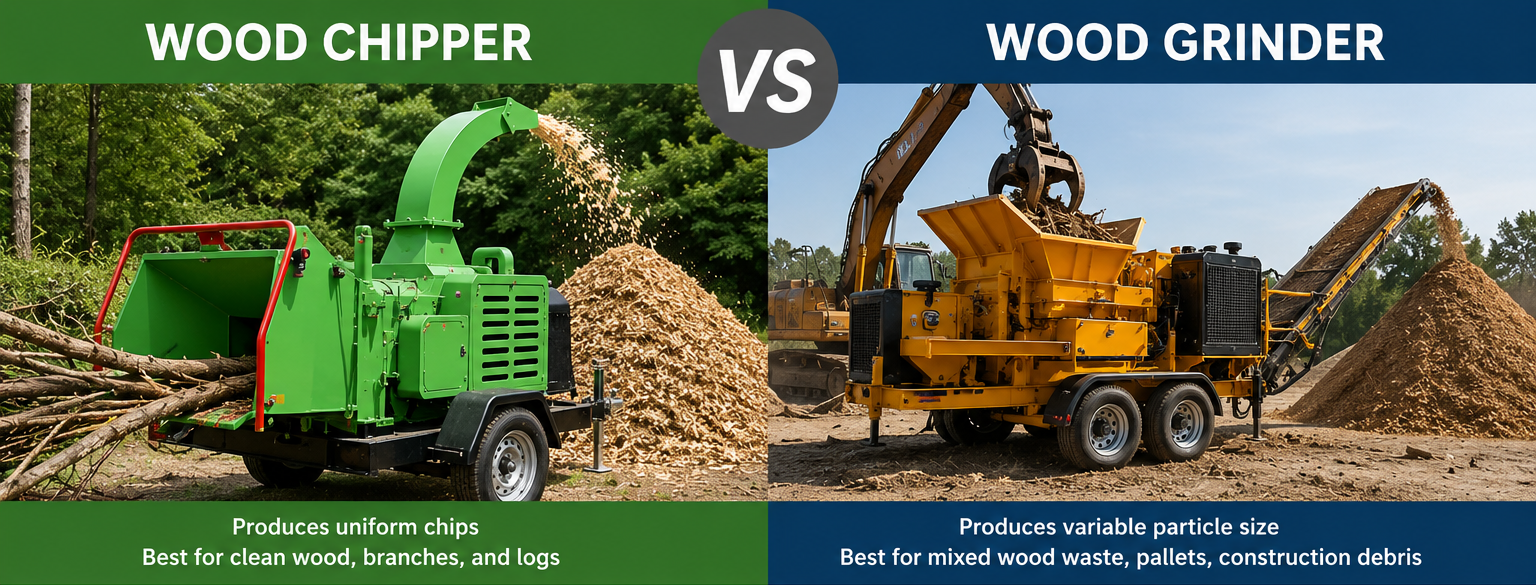
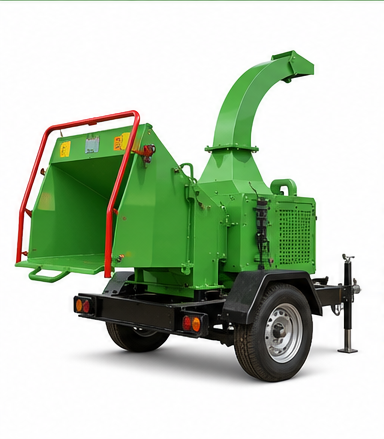
A wood chipper is designed primarily for relatively clean wood materials.
Typical feedstock includes:
- Tree branches
- Small logs
- Forestry residues
- Orchard trimmings
The machine uses knives mounted on a rotating disc or drum.
As wood enters the cutting zone, the knives slice material into chips.
The process resembles cutting rather than crushing.
This approach provides several advantages.
Consistent Chip Size
Wood chippers often produce uniform chips.
This makes them attractive for:
- Biomass fuel preparation
- Pulp and paper production
- Landscape mulch manufacturing
High Throughput
For clean feedstock, chipper productivity can be extremely high.
Lower Energy Consumption
Because material is cut rather than repeatedly impacted, energy requirements are often lower than grinding systems.
The limitation becomes apparent when feedstock quality deteriorates.
Contaminated materials can quickly damage cutting knives.
How Wood Grinders Process Material
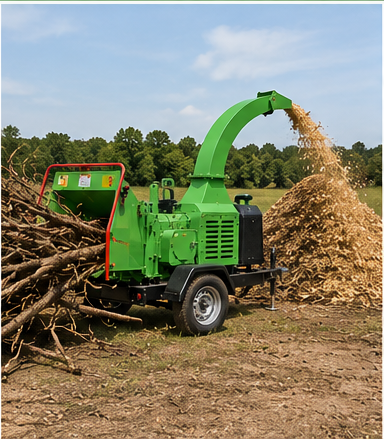
Wood grinders take a different approach.
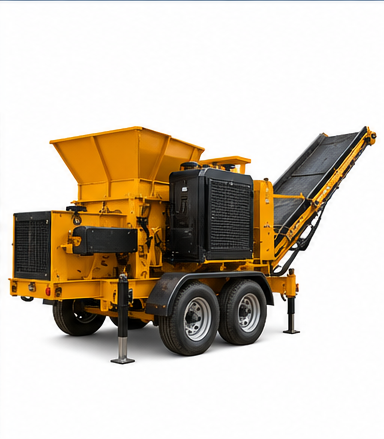
Rather than slicing material, they break it down through repeated impact and crushing.
The machine typically uses:
- Hammers
- Teeth
- Cutting blocks
- High-speed rotors
This design makes grinders more tolerant of difficult materials.
Common feedstock includes:
- Construction wood waste
- Pallets
- Tree stumps
- Demolition timber
- Mixed recycling materials
A grinder sacrifices some particle uniformity in exchange for greater versatility.
Many recycling facilities prefer grinders because incoming material is rarely clean or consistent.
Output Material Comparison
Output requirements often determine equipment selection.
Let’s compare the finished material.
Wood Chipper Output
Typical characteristics:
- Uniform chips
- Consistent dimensions
- Cleaner appearance
- Better for controlled industrial processes
Common applications:
- Biomass boilers
- Paper mills
- Pellet plant preprocessing
Wood Grinder Output
Typical characteristics:
- Variable particle size
- More fibrous texture
- Less uniform appearance
Common applications:
- Biomass feedstock preparation
- Compost production
- Waste volume reduction
- Secondary processing
If particle uniformity is critical, a chipper often performs better.
If feedstock variability is high, a grinder usually provides greater flexibility.
Feedstock Compatibility Comparison
This is where the largest difference becomes apparent.
| Feedstock Type | Wood Chipper | Wood Grinder |
| Tree Branches | Excellent | Excellent |
| Small Logs | Excellent | Good |
| Forestry Residues | Excellent | Good |
| Pallets | Limited | Excellent |
| Construction Wood Waste | Poor | Excellent |
| Tree Stumps | Poor | Good |
| Mixed Wood Waste | Limited | Excellent |
| Recycling Material | Poor | Excellent |
For wood recycling centers, feedstock diversity often favors grinders.
For forestry operations, chippers frequently remain the preferred solution.
Operating Cost and Maintenance Comparison
Equipment price is only one part of total ownership cost.
Long-term operating expenses frequently determine profitability.
Wood Chipper Maintenance
Main wear components:
- Knives
- Anvils
- Bearings
Knife maintenance is critical
Dull knives reduce productivity and increase fuel or electricity consumption.
For clean material streams, maintenance costs remain predictable.
Wood Grinder Maintenance
Main wear components:
- Hammers
- Screens
- Teeth
- Wear blocks
Maintenance frequency depends heavily on feedstock contamination.
However, grinders generally tolerate difficult material better than chippers.
Many recycling operators accept higher wear costs because grinders prevent production interruptions.
Application Scenario #1: Biomass Pellet Plant
A biomass pellet producer in Southeast Asia processes:
- Rubber tree branches
- Plantation residues
- Small-diameter logs
The plant requires consistent chip size before drying and pelletizing.
A drum wood chipper was selected because:
- Output consistency was critical
- Feedstock remained relatively clean
- Energy efficiency mattered
The chipper produced stable feedstock that improved downstream pellet quality.
Application Scenario #2: Wood Recycling Center
A recycling center in Western Europe receives:
- Waste pallets
- Construction timber
- Packaging wood
- Demolition debris
Incoming material varies daily.
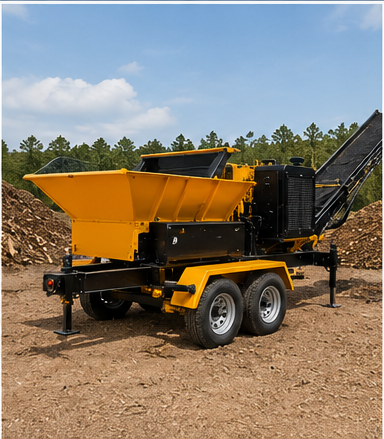
The operator selected a heavy-duty wood grinder.
Reasons included:
- Greater tolerance for mixed materials
- Reduced downtime
- Better adaptability
Although maintenance costs were higher, operational flexibility generated greater overall profitability.
Procurement Risks Buyers Often Ignore
Risk #1: Confusing End Product Requirements
Many buyers purchase a chipper because they want “wood chips.”
Later they discover the feedstock is unsuitable for knife-based equipment.
Always begin with raw material analysis.
Risk #2: Ignoring Wear Part Availability
Wear parts determine machine uptime.
Before purchasing, ask suppliers:
- What spare parts are included?
- What are replacement lead times?
- Are components stocked internationally?
Risk #3: Underestimating Electrical Requirements
For electric wood grinders and industrial chippers, power demand can be substantial.
Common export configurations include:
- 380V / 50Hz
- 400V / 50Hz
- 415V / 50Hz
- 460V / 60Hz
- 480V / 60Hz
Voltage mismatch remains one of the most frequent commissioning issues.
Export Experience from Chinese Manufacturers
After exporting wood processing equipment to dozens of countries, several lessons consistently emerge.
Packaging Matters
Large machines require:
- Steel-frame reinforcement
- Moisture protection
- Rotor locking systems
Ocean transportation can expose equipment to vibration and humidity.
Proper packaging reduces damage risk.
Documentation Matters
Export documentation should include:
- Packing list
- Commercial invoice
- Electrical drawings
- Maintenance manual
Incomplete documentation often causes longer delays than production itself.
Spare Parts Planning Matters
Professional buyers frequently order wear parts together with the machine.
This minimizes future downtime.
FAT Testing Before Shipment
Many overseas buyers now request Factory Acceptance Testing before shipment.
A comprehensive FAT typically includes:
1、No-Load Testing
Verifies:
- Rotor balance
- Bearing temperature
- Vibration performance
2、Material Processing Test
Confirms:
- Throughput capacity
- Particle size
- Operational stability
3、Electrical Verification
Checks:
- Control systems
- Emergency stop functions
- Motor operation
Video documentation is commonly provided for customers unable to attend in person.
Which Machine Delivers Better ROI?
The answer depends entirely on feedstock.
Choose a Wood Chipper if:
- Material is relatively clean
- Uniform chip size is important
- Energy efficiency matters
- Forestry or plantation residues dominate
Choose a Wood Grinder if:
- Feedstock is mixed
- Recycling applications are involved
- Material contamination is common
- Operational flexibility is a priority
The most profitable investment is not necessarily the larger machine.
It is the machine that processes your actual material with the lowest cost per ton.
FAQ
Can a wood grinder replace a wood chipper?
In some applications, yes. However, grinders usually produce less uniform output.
Which machine is better for biomass pellet production?
For clean feedstock requiring consistent particle size, wood chippers are often preferred.
Which machine handles pallets better?
Wood grinders typically perform better with waste pallets and recycled wood.
Is FAT testing necessary?
For export projects, FAT testing helps verify machine performance before shipment and reduces installation risks.
Call To Action
Not sure whether your project requires a wood chipper or a wood grinder?
Send us your raw material photos, target capacity, final product requirements, and local power specifications.
Our engineering team will recommend the most suitable solution, provide operating cost estimates, arrange FAT testing, and help ensure your project achieves the best return on investment.