
Home » News » OEM Feed Pellet Machine Guide: How to Find the Right Partner for Your Brand
OEM Feed Pellet Machine Guide: How to Find the Right Partner for Your Brand
Why OEM Partnership Matters More Than Buying a Machine
Launching a feed pellet machine brand requires much more than finding a factory capable of producing equipment.
The manufacturer you choose will directly influence product quality, delivery reliability, customer satisfaction, after-sales service, and even the future competitiveness of your brand.
Many overseas buyers initially compare suppliers based on machine specifications and quotations.
Experienced brand owners evaluate different criteria:
- Can the manufacturer support product customization?
- Does the engineering team understand different feed applications?
- Can production remain consistent across multiple orders?
- Is spare parts support available years after delivery?
- Will the factory continue improving products as market demand changes?
These questions determine whether your supplier becomes a long-term strategic partner or simply a short-term equipment vendor.
Define Your Brand Strategy Before Looking for a Manufacturer
One of the most common mistakes among new OEM buyers is contacting dozens of factories before clearly defining their own product positioning.
Manufacturers can only recommend suitable solutions after understanding your business goals.
Before requesting quotations, clarify:
- Which countries will your equipment be sold in?
- Are your customers small farms or commercial feed mills?
- Do you target poultry, livestock, aquatic feed, or specialty feed?
- Will you sell complete production lines or standalone pellet machines?
- Do you need exclusive product designs?
Different markets require different equipment configurations.
For example:
A distributor serving family farms usually prioritizes compact machines with simple maintenance.
A dealer supplying commercial feed mills focuses more on production efficiency, automation, and long-term reliability.
Step 1: Verify the Factory Is a Real OEM Manufacturer
Many companies claim to provide OEM services.
Some simply purchase machines from third-party factories and apply customer logos.
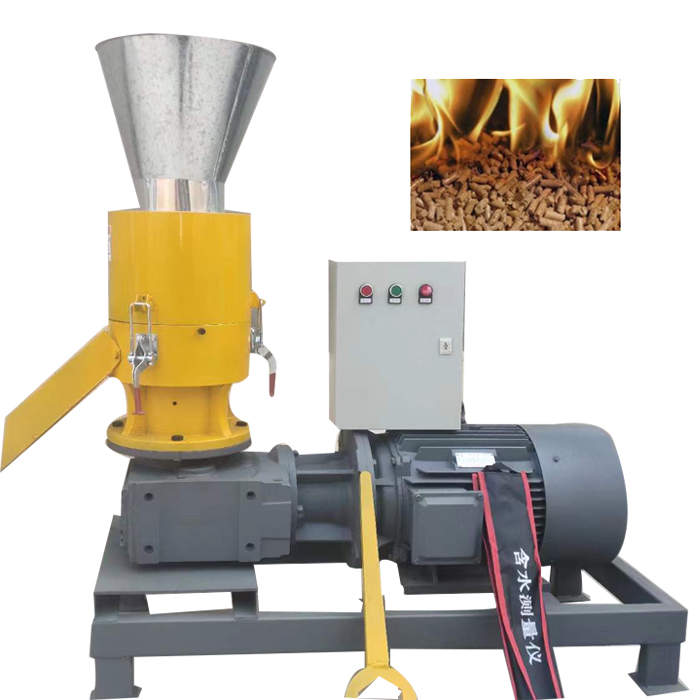
A genuine OEM manufacturer should control the core production process.
Typical manufacturing capabilities include:
- CNC machining
- Welding workshops
- Precision machining centers
- Assembly lines
- Electrical control integration
- Machine testing facilities
Request current production videos rather than promotional brochures.
Videos showing real production provide valuable insight into manufacturing capability and factory organization.
Another useful question is: “Which major components are produced in-house?”
The answer reveals how much control the manufacturer has over product quality and delivery schedules.
Step 2: Evaluate Engineering & Product Development Capability
OEM cooperation should extend beyond logo customization.
Strong manufacturers actively participate in product optimization.
Engineering capability becomes particularly important when serving different feed industries.
Typical engineering support includes:
- Ring die optimization
- Flat die improvements
- Feeding system design
- Conditioning system matching
- Transmission optimization
- Energy-saving upgrades
- Noise reduction
- Electrical control customization
Manufacturers with experienced engineering teams can recommend configurations based on production capacity, raw materials, and feed formulations.
OEM vs ODM
Many buyers confuse OEM with ODM.
OEM
OEM manufacturing follows customer specifications.
Typical customization includes:
- Brand logo
- Machine color
- Nameplate
- User manuals
- Packaging
- Voltage configuration
Suitable for established brands with defined product requirements.
ODM
ODM manufacturers provide existing product platforms that can be customized.
Possible services include:
- Structural improvements
- New machine appearance
- Control panel redesign
- Smart monitoring systems
- Packaging concepts
ODM projects help startup brands reduce development costs while accelerating product launches.
Step 3: Assess Quality Control Throughout Manufacturing
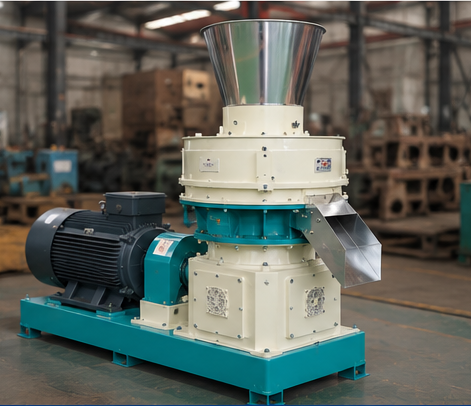
Feed pellet machines operate continuously under heavy loads.
Stable quality depends on systematic inspection during production.
Incoming Material Inspection
Critical components include:
- Bearings
- Electric motors
- Ring dies
- Rollers
- Gearboxes
- Electrical components
Reliable factories verify supplier quality before materials enter production.
Machining Inspection
Inspection items commonly include:
- Shaft concentricity
- Ring die dimensions
- Gear alignment
- Surface finish
- Bearing seat accuracy
Precision machining contributes directly to machine lifespan and pellet quality.
Assembly Inspection
Engineers verify:
- Transmission alignment
- Lubrication systems
- Fastener torque
- Electrical wiring
- Safety guards
These inspections minimize vibration and improve operational stability.
Final Product Inspection
Completed machines generally undergo:
- Trial production
- Capacity testing
- Pellet quality evaluation
- Electrical testing
- Safety inspection
- Appearance inspection
Documented inspection records improve consistency between production batches.
Step 4: Review Export Experience and International Support
Manufacturing quality alone is insufficient for successful international projects.
Professional exporters understand:
- Voltage standards
- Local electrical requirements
- Packaging regulations
- Customs documentation
- Installation support
- Spare parts logistics
Typical export voltage options include:
- 380V / 50Hz
- 400V / 50Hz
- 415V / 50Hz
- 220V / 60Hz
- 440V / 60Hz
Confirming electrical specifications before production reduces installation problems after delivery.
Export Packaging Experience
Industrial machinery requires robust packaging for international transportation.
Professional export packaging commonly includes:
- Steel frames
- Fumigation-free plywood cases
- Moisture-proof wrapping
- Rust-prevention treatment
- Shock-resistant supports
Proper packaging protects critical components during long ocean shipments.
Step 5: Understand OEM Services Beyond Logo Printing
Many first-time buyers believe OEM simply means adding a logo.
Professional OEM cooperation usually covers much more.
Typical customization includes:
- Brand identity
- Machine color
- Control cabinet language
- Nameplates
- User manuals
- Spare parts kits
- Packaging design
- Marketing materials
Some manufacturers also assist customers with:
- Product photography
- Technical brochures
- Installation videos
- Training materials
These services help brands enter new markets more efficiently.
Manufacturer vs Trading Company Comparison
| Evaluation Item | OEM Manufacturer | Trading Company |
| Engineering Support | Excellent | Limited |
| Product Development | Strong | Limited |
| OEM Flexibility | High | Moderate |
| Quality Control | Direct | Indirect |
| Technical Communication | Faster | Slower |
| Spare Parts Support | Better | Depends on Factory |
| Long-Term Cooperation | Strong | Variable |
Trading companies may simplify sourcing from multiple suppliers.
For private-label brands, direct cooperation with manufacturers generally offers stronger technical support and greater customization flexibility.
Real Project Scenario #1: Building a Private Label Feed Machinery Brand
A distributor in Eastern Europe planned to launch a private-label feed equipment brand targeting medium-sized livestock farms.
Instead of selecting machines from multiple factories, the company partnered with one OEM manufacturer capable of supplying pellet machines, mixers, crushers, and spare parts under a unified brand.
The manufacturer also provided:
- Customized machine colors
- Branded packaging
- English operation manuals
- Spare parts catalog
The unified product range strengthened brand recognition and simplified after-sales support.
Real Project Scenario #2: Local Dealer Expanding Product Portfolio
A machinery dealer in South America previously focused on grain processing equipment.
As customer demand shifted toward feed production, the company introduced feed pellet machines through OEM cooperation.
Engineers customized the equipment for local feed formulations and electrical standards.
Before shipment, Factory Acceptance Testing verified production capacity and pellet quality.
The dealer successfully expanded into a new market without developing products from scratch.
Common OEM Procurement Risks
Risk #1: Choosing the Lowest Quotation
Lower prices may involve:
- Lower-grade bearings
- Shorter-life ring dies
- Basic motors
- Simplified electrical systems
Evaluate complete technical specifications rather than unit price alone.
Risk #2: Ignoring Future Spare Parts Supply
OEM projects require long-term support.
Confirm availability of:
- Ring dies
- Rollers
- Bearings
- Gearboxes
- Electrical components
Reliable spare parts planning reduces downtime and improves customer satisfaction.
Risk #3: Underestimating Technical Support
Installation guidance, commissioning, and operator training are often more valuable than minor price differences.
Manufacturers with experienced engineers can shorten startup time and reduce operational problems.
Factory Acceptance Testing (FAT)
Professional OEM buyers frequently require FAT before shipment.
Typical procedures include:
Mechanical Inspection
Verification of:
- Machine assembly
- Lubrication
- Drive systems
Capacity Testing
Verification of:
- Production output
- Pellet diameter
- Pellet density
- Pellet durability
Electrical Testing
Inspection includes:
- Motor operation
- Control cabinet functions
- Emergency stop system
- Voltage configuration
Safety Inspection
Verification of:
- Protective covers
- Electrical grounding
- Alarm functions
Manufacturers commonly provide FAT videos for overseas customers unable to attend the inspection.
Frequently Asked Questions
What is the difference between OEM and ODM?
OEM follows customer specifications, while ODM provides existing machine platforms that can be customized with branding and selected design changes.
Can feed pellet machines be customized for different countries?
Yes. Voltage, frequency, electrical components, control language, packaging, manuals, and branding can all be customized.
Is FAT necessary for OEM orders?
Yes. FAT helps confirm machine performance before shipment and reduces commissioning risks after delivery.
How long does OEM production usually take?
Lead time depends on customization level, production schedule, and project complexity. Large production lines generally require longer manufacturing periods than standalone pellet machines.
Building a Long-Term OEM Partnership
Successful OEM cooperation is built on continuous collaboration rather than individual purchase orders.
The best manufacturing partners help customers:
- Improve product quality
- Expand product portfolios
- Optimize production costs
- Meet international certification requirements
- Develop new machine models
- Respond to changing market demands
When evaluating suppliers, prioritize engineering capability, quality management systems, export experience, communication efficiency, and long-term technical support.
A dependable OEM manufacturer becomes an extension of your own engineering and product development team.
Call To Action
Looking for a reliable OEM feed pellet machine manufacturer in China?
Whether you are building a private-label brand, expanding your dealership, launching a specialty feed equipment business, or supplying industrial feed production projects, our experienced engineering and export teams can help bring your ideas to market.
Contact us today for OEM consultation, customized machine solutions, sample evaluations, Factory Acceptance Testing support, product documentation, and competitive quotations designed for your target market.