
Home » News » How to Choose a Reliable Feed Pellet Machine Manufacturer in China
How to Choose a Reliable Feed Pellet Machine Manufacturer in China
Why Your Choice of Manufacturer Matters More Than Machine Price
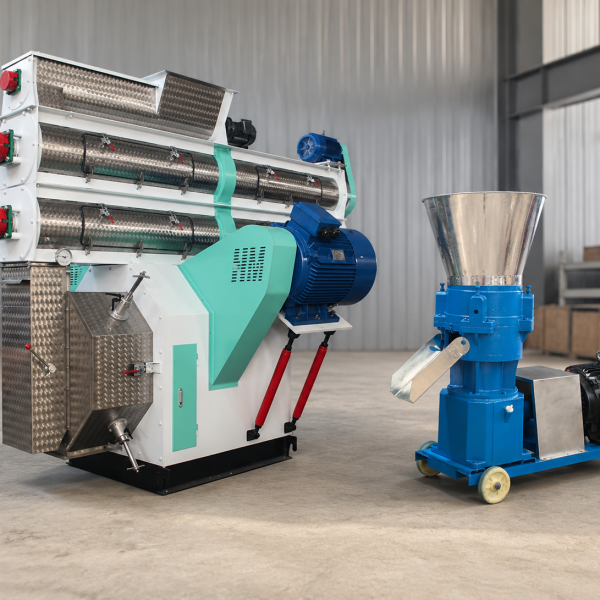
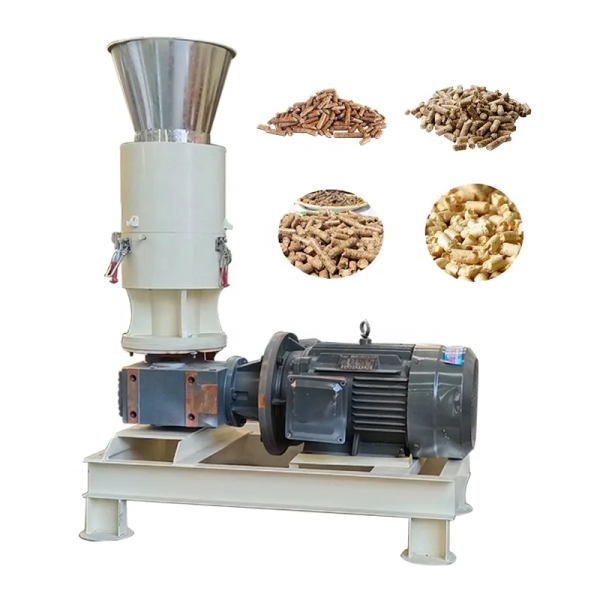
China has become one of the world’s largest manufacturing hubs for feed pellet machines, supplying customers in Southeast Asia, Africa, South America, Europe, and the Middle East.
Searching for suppliers is easy.
Finding one capable of delivering stable quality over many years is considerably more challenging.
For large farming groups and commercial feed mills, equipment selection directly affects:
- Feed production efficiency
- Pellet quality consistency
- Energy consumption
- Maintenance costs
- Plant uptime
- Return on investment
A lower purchase price cannot compensate for frequent downtime or poor pellet quality.
Professional buyers therefore focus on identifying manufacturers with strong engineering capability, stable production systems, and proven export experience.
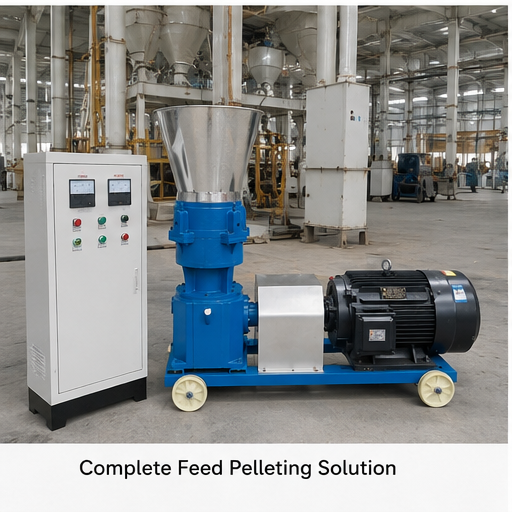
What Professional Buyers Evaluate Before Requesting a Quotation
Experienced procurement teams rarely begin by asking for price.
Instead, they evaluate whether a manufacturer can support the project from design through installation and long-term operation.
Typical evaluation points include:
- Factory scale
- Engineering capability
- Production equipment
- Quality management system
- Export experience
- Spare parts availability
- Technical support
These factors often have a greater impact on lifecycle cost than the initial machine quotation.
Step 1: Verify the Supplier Is a Genuine Manufacturer
Many companies advertise feed pellet machines online.
Some own production facilities.
Others act primarily as trading companies.
For medium and large feed mill projects, direct cooperation with manufacturers usually provides greater technical support and shorter communication paths.
A genuine manufacturer should be able to demonstrate:
- Machining workshops
- Welding areas
- CNC processing equipment
- Assembly lines
- Test-running areas
Finished product inspection stations
Ask for recent workshop videos rather than promotional photos.
Videos showing machines under assembly provide a much clearer understanding of production capability.
A useful question is: “Which key components are manufactured in-house?”
Manufacturers controlling more production processes generally maintain better quality consistency.
Step 2: Evaluate Engineering and Manufacturing Capability
A feed pellet machine is not simply a mechanical product.
Its performance depends on the coordination of multiple systems.
Professional manufacturers should possess expertise in:
- Pellet chamber design
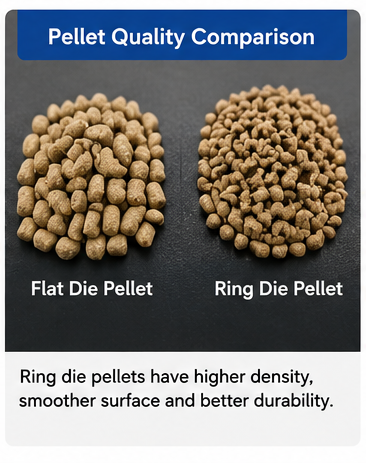
- Ring die or flat die optimization
- Transmission systems
- Main shaft machining
- Bearing selection
- Lubrication systems
- Electrical control integration
Engineering capability determines:
- Pellet quality
- Output capacity
- Energy efficiency
- Machine lifespan
Factories with dedicated R&D teams are usually better positioned to support future upgrades and customized projects.
Can the Factory Support OEM Projects?
Many overseas buyers require:
- Private branding
- Customized colors
- Nameplate design
- User manuals
- Control panel language
- Voltage customization
- Packaging customization
A qualified OEM manufacturer should be able to support these requirements without affecting production quality.
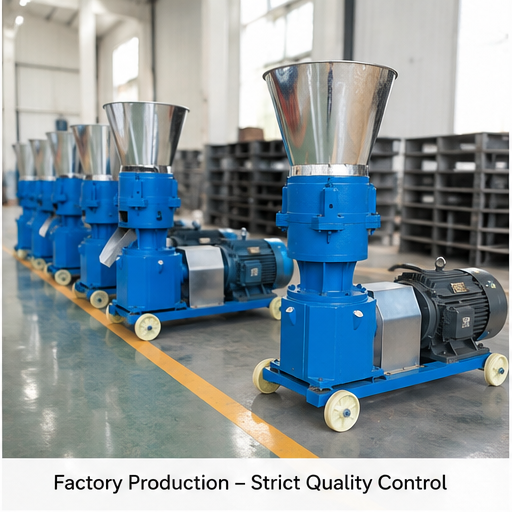
Step 3: Review Quality Control and Production Management
Quality control should begin before production starts.
Reliable manufacturers inspect every major production stage.
Incoming Material Inspection
Critical components include:
- Electric motors
- Bearings
- Ring dies
- Rollers
- Gearboxes
- Electrical components
Material inspection reduces the risk of premature equipment failure.
Machining Inspection
During production, inspectors verify:
- Shaft concentricity
- Ring die machining accuracy
- Bearing seat dimensions
- Gear alignment
- Surface finish
Machining precision directly influences equipment lifespan.
Assembly Inspection
Engineers verify:
- Lubrication systems
- Drive alignment
- Fastener torque
- Electrical wiring
- Safety protection
Proper assembly minimizes vibration and improves operating stability.
Final Inspection
Completed machines typically undergo:
- Trial production
- Pellet quality verification
- Capacity testing
- Noise inspection
- Electrical safety testing
Documented inspection procedures improve consistency across production batches.
Step 4: Assess Export Experience and Global Compliance
Export capability extends far beyond arranging shipping.
Manufacturers serving international markets generally understand:
- Voltage standards
- Frequency requirements
- Local electrical regulations
- Export documentation
- Installation guidance
Typical voltage options include:
- 380V / 50Hz
- 400V / 50Hz
- 415V / 50Hz
- 220V / 60Hz
- 440V / 60Hz
Incorrect voltage selection remains one of the most common causes of commissioning delays.
Professional manufacturers confirm electrical specifications before production begins.
Packaging for International Transport
Feed pellet machines are heavy industrial equipment.
Export packaging should protect:
- Ring dies
- Bearings
- Motors
- Control cabinets
- Painted surfaces
Common export methods include:
- Steel frame packaging
- Fumigation-free plywood cases
- Moisture-proof wrapping
- Shock-resistant supports
Proper packaging reduces transportation damage during long-distance ocean shipping.
Step 5: Evaluate OEM & After-sales Support
Machine delivery is only the beginning of the project.
Long-term support often determines customer satisfaction.
Reliable manufacturers usually provide:
- Installation guidance
- Commissioning support
- Operation training
- Spare parts supply
- Maintenance manuals
- Online technical assistance
For overseas projects, remote video support has become increasingly common.
Manufacturer vs Trading Company Comparison
| Evaluation Item | Manufacturer | Trading Company |
| Engineering Support | Excellent | Limited |
| OEM Capability | Strong | Moderate |
| Production Control | Direct | Indirect |
| Technical Communication | Fast | Slower |
| Spare Parts Supply | Better | Depends on Factory |
| Customization | High | Moderate |
| Long-term Cooperation | Strong | Variable |
Trading companies may simplify mixed-product sourcing.
For feed production projects requiring technical support, direct cooperation with manufacturers is generally more efficient.
Real Application Scenario #1: Poultry Feed Mill Expansion
A poultry producer in East Africa expanded annual feed production capacity from 8 tons per hour to 15 tons per hour.
The customer required:
- Stable pellet quality
- Continuous operation
- Easy maintenance
During project planning, engineers optimized the ring die compression ratio according to local corn and soybean meal formulations.
Factory Acceptance Testing confirmed production capacity before shipment.
The equipment entered production with minimal commissioning adjustments.
Real Application Scenario #2: Shrimp Feed Processing Plant
A shrimp farming company in Southeast Asia required compact pellet production equipment capable of producing high-density aquatic feed.
Because shrimp feed formulations differ significantly from poultry feed, engineers recommended customized ring die specifications and modified conditioning parameters.
Before shipment, pellet durability and output capacity were verified during factory testing.
The customer reduced raw material waste while improving pellet consistency.
Common Procurement Risks
Risk #1: Comparing Only Machine Price
Lower quotations may involve:
- Lower-grade bearings
- Inferior motors
- Shorter service-life ring dies
- Simplified electrical components
Always compare complete technical specifications.
Risk #2: Ignoring Spare Parts Availability
Feed mills operate continuously.
Unexpected downtime becomes expensive.
Confirm long-term availability of:
- Ring dies
- Rollers
- Bearings
- Gearboxes
- Motors
- Sensors
Risk #3: Overlooking Formula Compatibility
Different raw materials require different pellet chamber configurations.
Always discuss feed formulations before finalizing equipment selection.
Factory Acceptance Testing (FAT) Before Shipment
Professional buyers increasingly request FAT before shipment.
Typical procedures include:
Mechanical Inspection
Verification of:
- Machine assembly
- Drive system
- Lubrication
Capacity Testing
Verification of:
- Production output
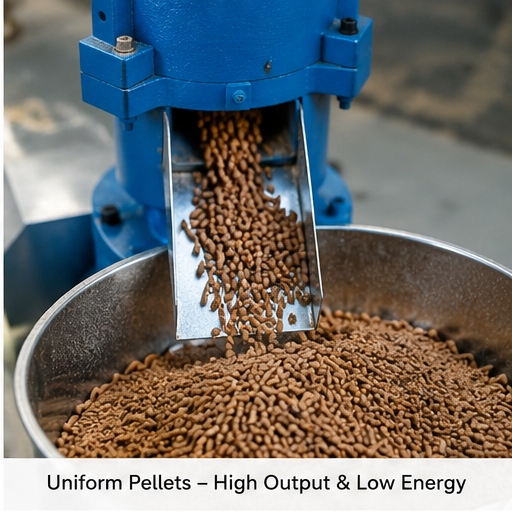
- Pellet size
- Pellet density
Electrical Testing
Inspection includes:
- Motor operation
- Control cabinet functions
- Emergency stop system
- Voltage verification
Safety Inspection
Verification of:
- Protective guards
- Electrical grounding
- Alarm functions
Video documentation is frequently provided for customers unable to attend FAT in person.
Frequently Asked Questions
Can one pellet machine produce different feed types?
Yes. By changing ring dies, adjusting formulations, and modifying operating parameters, many machines can produce poultry, livestock, or aquatic feed.
How do I select the correct voltage?
Confirm your local electrical standard before production. Most manufacturers can customize voltage and frequency.
Is Factory Acceptance Testing necessary?
For commercial feed mill projects, FAT significantly reduces installation risks and verifies that the equipment meets agreed specifications.
How long is the production lead time?
Lead time depends on machine configuration, customization level, and production schedule. Large turnkey projects usually require longer manufacturing periods.
Building a Long-term Manufacturing Partnership
The best manufacturers do more than deliver equipment.
They support customers throughout the entire project lifecycle by helping them:
- Improve pellet quality
- Increase production efficiency
- Reduce operating costs
- Expand production capacity
- Optimize future equipment upgrades
When evaluating suppliers, focus on engineering expertise, manufacturing capability, quality management, export experience, and after-sales support.
A reliable manufacturer becomes a long-term technical partner rather than simply an equipment supplier.
Call To Action
Looking for a reliable feed pellet machine manufacturer in China?
Whether you operate a commercial feed mill, manage a large livestock group, supply feed machinery in your local market, or plan to launch a new feed production project, our engineering and export teams can provide complete solutions tailored to your production goals.
Contact us today for product catalogs, customized quotations, OEM services, Factory Acceptance Testing support, and turnkey feed pellet production line solutions.