Your position:
PRODUCTS LIST
Last News
Inquiry
Introduction
Product Description:
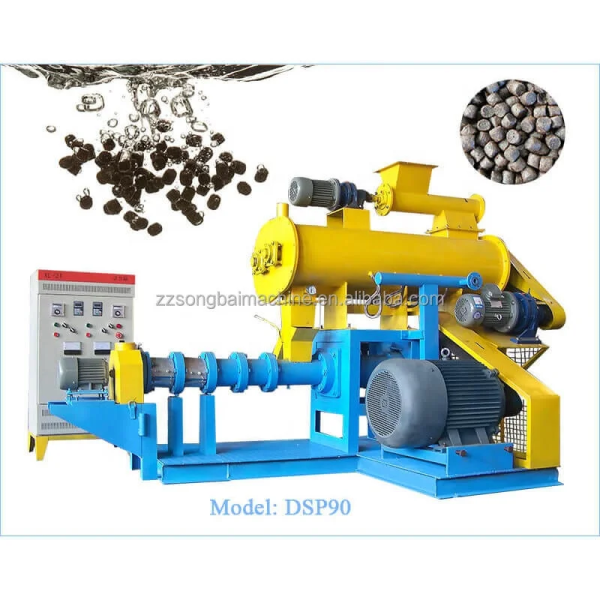
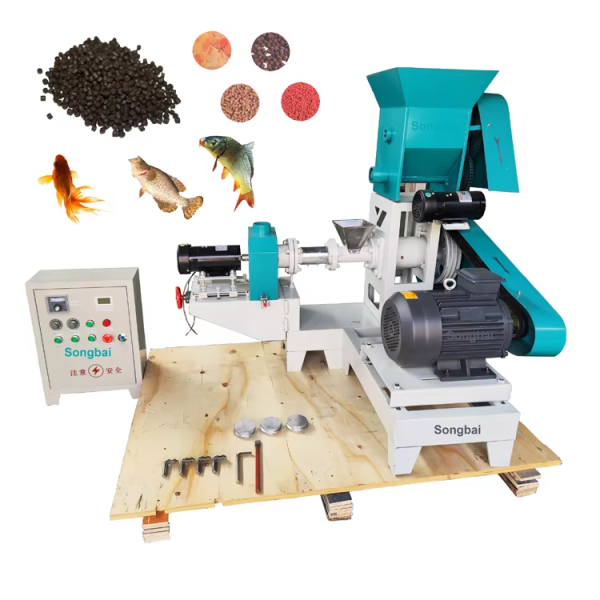
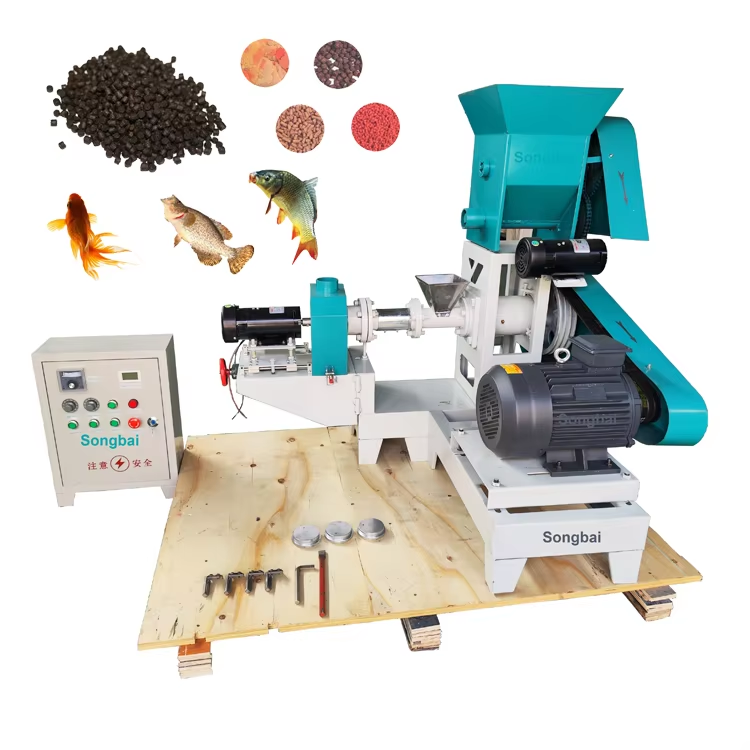
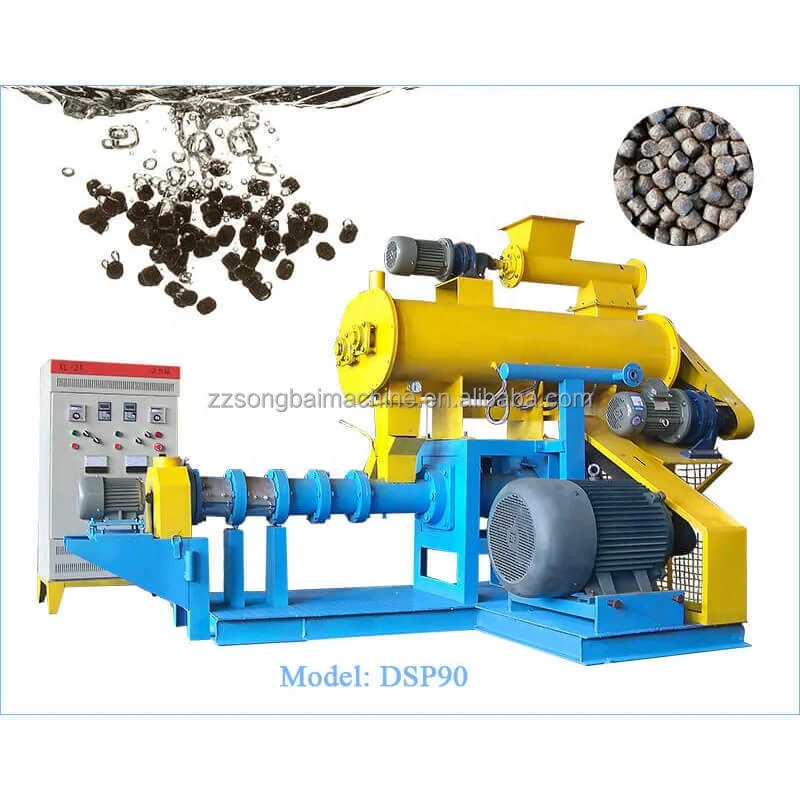
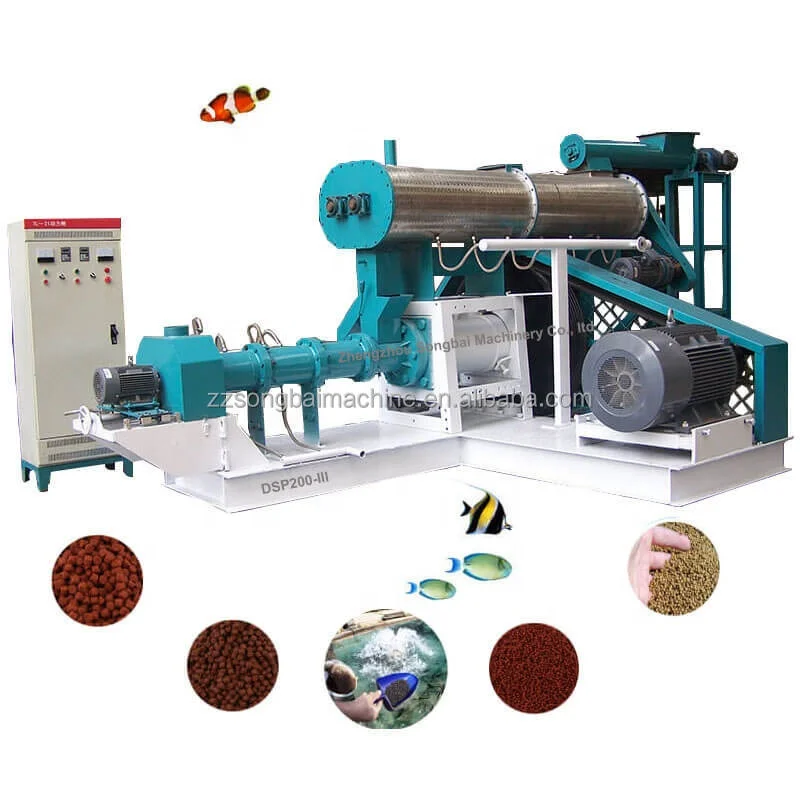
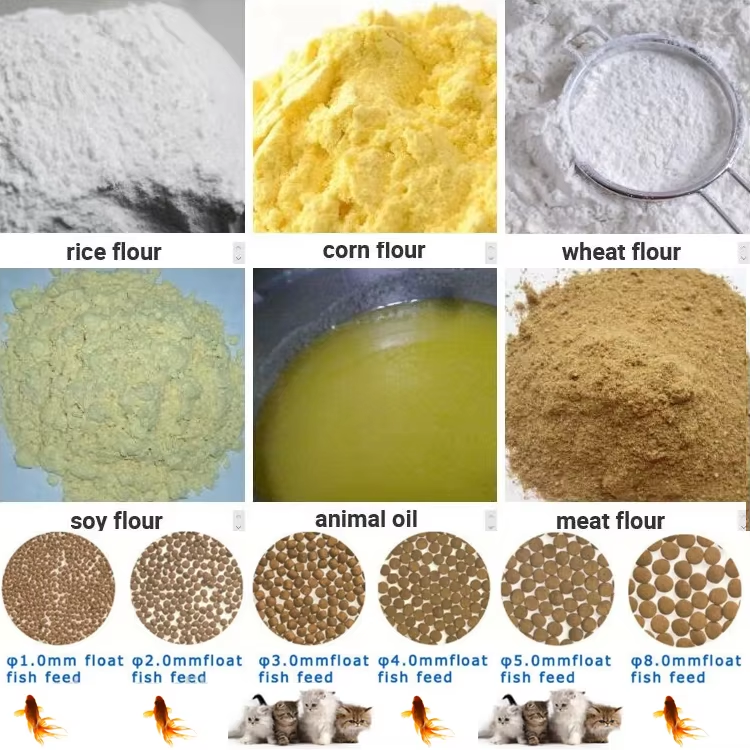
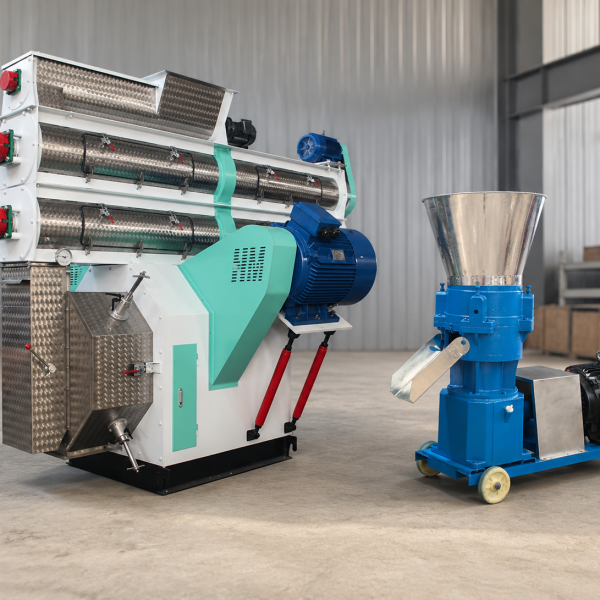
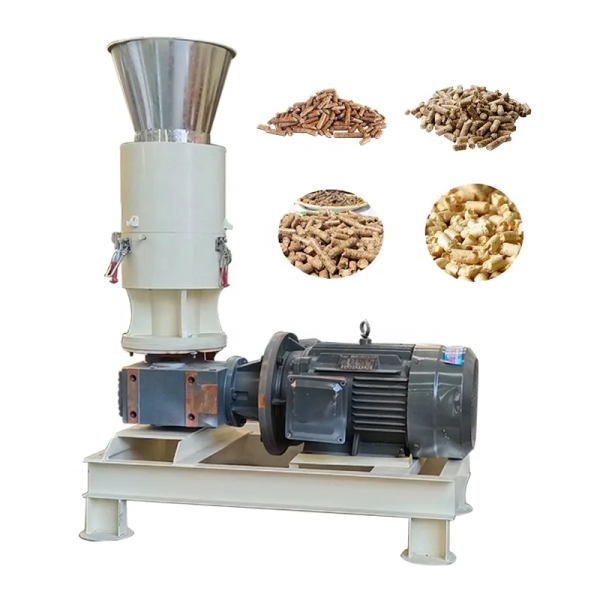
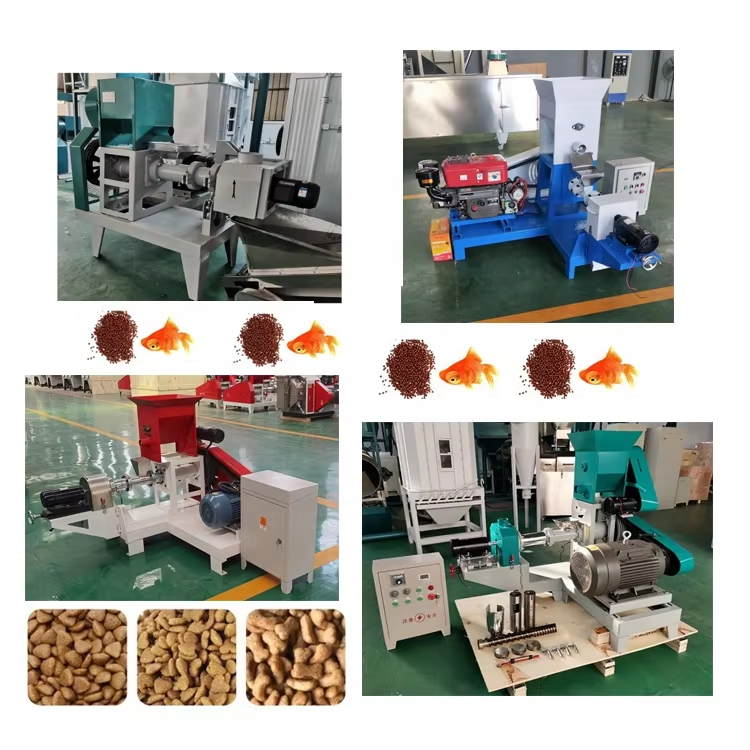
A fish feed pellet machine (also called a fish feed extruder) is a specialized piece of equipment designed to produce floating and sinking feed pellets for fish, shrimp, crabs, and other aquatic species. Using advanced extrusion technology, it transforms powdered ingredients like fish meal, soybean meal, wheat, and corn into nutritionally balanced, water-stable pellets.
Floating vs. Sinking Pellets – What’s the Difference?
| Feature | Floating Pellets | Sinking Pellets |
|---|---|---|
| Buoyancy | Float on water surface for 12–24 hours | Sink to the bottom immediately |
| Best for | Tilapia, catfish, trout, surface feeders | Shrimp, crabs, bottom feeders |
| Digestion | High gelatinization (90%+) for easy digestion | Good gelatinization, slower release |
| Feed monitoring | Farmers can see feeding activity | Less visible, suited for bottom dwellers |
How It Works
Raw materials are ground into fine powder (under 0.5mm) and mixed with steam and water inside the machine. The twin screw extrusion system cooks the starch at high temperature and pressure. When the cooked dough exits through the die, it expands. For floating pellets, expansion creates air pockets that keep them on the surface. For sinking pellets, less expansion makes them dense and heavy.
Key Features
-
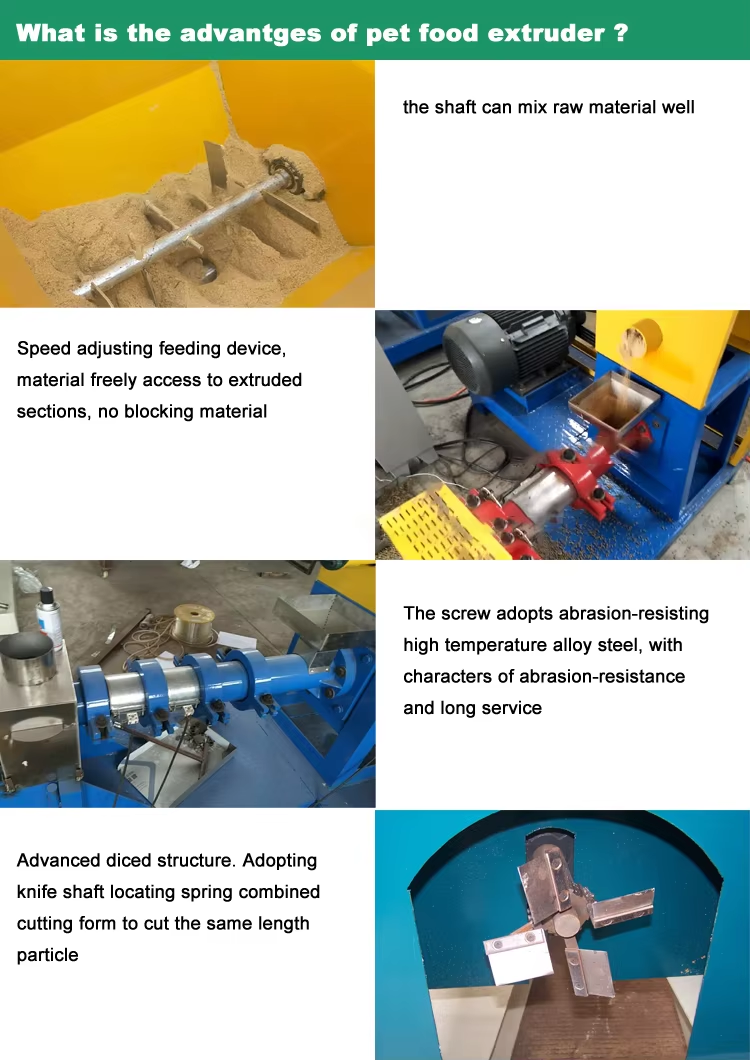
Twin screw extruder – superior mixing, higher gelatinization (90%+), better digestibility
-
Adjustable pellet size – change the die to produce 0.5mm to 15mm pellets
-
High water stability – pellets stay intact in water for 2–4 hours, reducing waste
-
Stainless steel construction – food-grade, rust-resistant, easy to clean
-
Switchable modes – produce floating or sinking pellets with the same machine
-
Automatic operation – continuous production with minimal labor
What Fish Can It Feed?
| Species | Pellet Type | Typical Pellet Size |
|---|---|---|
| Tilapia | Floating | 2–6 mm |
| Catfish | Floating / Sinking | 3–8 mm |
| Shrimp | Sinking | 1–3 mm |
| Trout | Floating | 3–6 mm |
| Carp | Floating / Sinking | 2–5 mm |
| Ornamental fish | Floating | 0.5–3 mm |
Technical Specifications (Typical Models)
| Parameter | Small | Medium | Large |
|---|---|---|---|
| Capacity | 50–150 kg/h | 200–600 kg/h | 800–2000 kg/h |
| Power | 7.5–15 kW | 22–45 kW | 55–90 kW |
| Screw type | Single screw | Twin screw | Twin screw |
| Pellet size | 0.5–8 mm | 1–12 mm | 1–15 mm |
| Voltage | 220V / 380V | 380V | 380V / custom |
Complete Fish Feed Production Line
A full production line typically includes:
-
Hammer mill – grinds raw materials into fine powder
-
Mixer – blends ingredients evenly
-
Fish feed extruder – produces floating or sinking pellets
-
Dryer – removes moisture from pellets
-
Oil sprayer – adds fat or oil for nutrition
-
Cooler – brings pellets to room temperature
-
Packing scale – bags the final product
How to Choose the Right Fish Feed Pellet Machine
-
Floating or sinking? Floating requires a more advanced extruder with steam conditioning.
-
Capacity – small farm: 50–200 kg/h; commercial: 500–2000 kg/h.
-
Pellet size – fry need 0.5–1mm; adult fish need 4–10mm.
-
Power source – electric motor (standard) or diesel engine (remote areas).
-
Budget – small models start around $3,000–5,000; commercial lines $15,000–50,000+.
Maintenance Tips
-
Clean the die and screw after each use to prevent blockage
-
Check cutter blades regularly – sharp blades make uniform pellets
-
Lubricate gearbox every 500 hours of operation
-
Use only dry, clean ingredients (moisture 20–30% for wet extrusion)
Why Buy a Fish Feed Pellet Machine?
-
Save money – produce your own feed at 30–50% lower cost than buying commercial feed
-
Control quality – choose exactly what goes into your fish feed
-
Reduce waste – floating pellets let you see how much fish eat
-
Fresh feed – produce on demand, no long storage
A fish feed pellet machine turns local ingredients into high-value aquafeed. Whether you run a small farm, a feed mill, or a commercial aquaculture operation, there is a model that fits your needs. Simple to operate, built to last.
Inquiry
Please feel free to submit your inquiry information to us. We will contact with you as soon as possible.