
Home » News » 10 Common Materials a Wood Grinder Can Process (From Pallets to Tree Roots)
10 Common Materials a Wood Grinder Can Process (From Pallets to Tree Roots)
Introduction
From the perspective of a land clearing contractor, a wood grinder is not a “wood processing machine” in theory—it is a daily tool that decides whether a job site is cleared in two days or dragged into a week. What enters the hopper is rarely clean logs. It is mixed waste: soil-covered roots, broken pallets, storm-fallen trunks, construction scraps, and irregular branches that vary in moisture and hardness.
This article is based on real equipment supply experience to biomass pellet plants and tree service companies. It focuses on what actually goes into a wood grinder and what operators should care about when selecting a machine for continuous field operation.
1. Ten Common Materials a Wood Grinder Can Handle
1) Wooden pallets
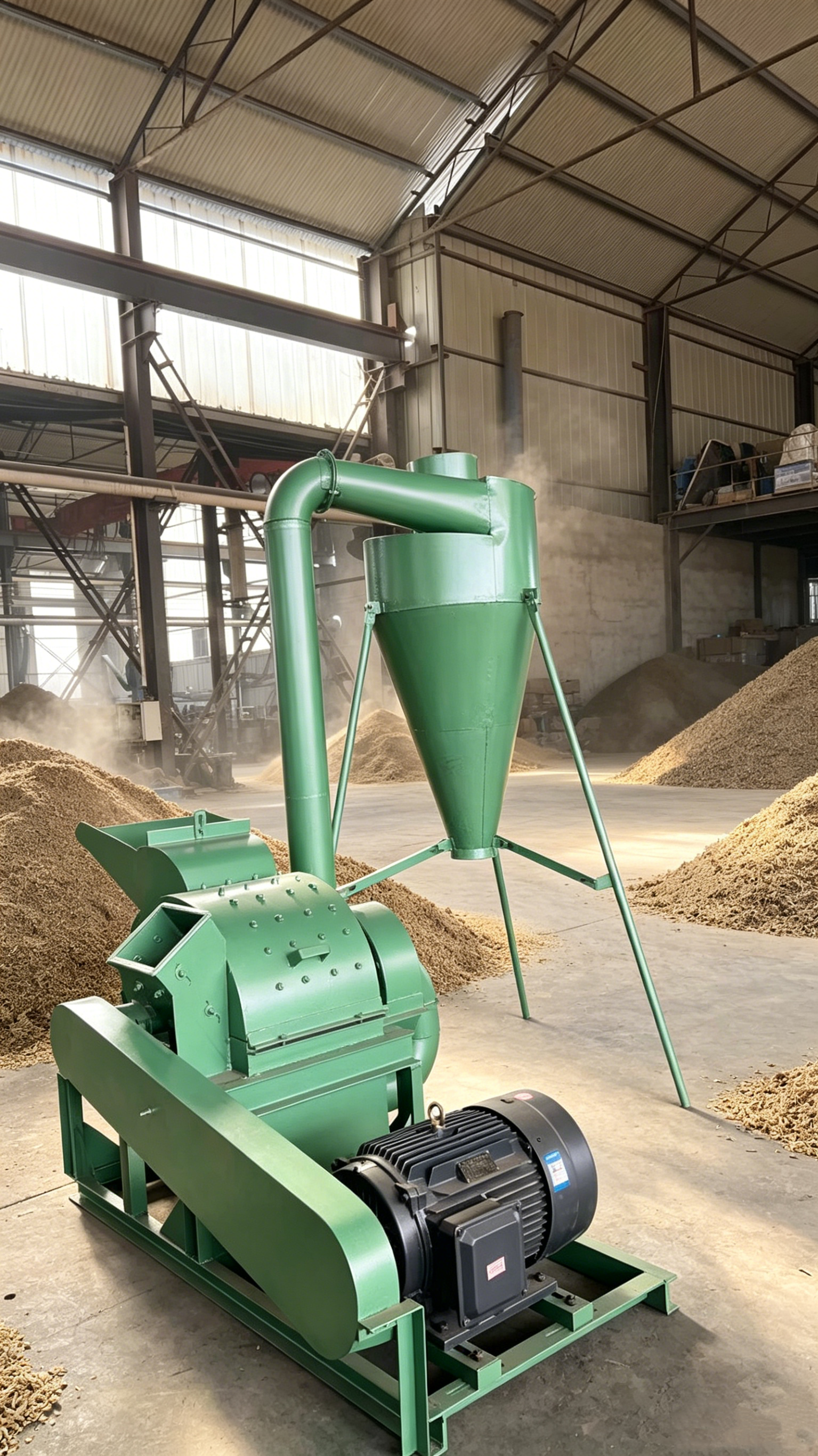
Pallets are the most common industrial waste in recycling yards. They often contain nails, broken boards, and mixed hardwood/softwood structures. A heavy-duty wood grinder processes them into uniform chips for biomass fuel or board production.
Key issue: metal contamination
Operational note: magnetic separator is usually installed after grinding
2) Tree trunks
Fresh or dry trunks from land clearing projects are high-volume materials. Diameter inconsistency requires machines with strong feeding rollers and torque-stable cutting systems.
3) Tree roots with soil
Roots are one of the most challenging materials. Soil and stones accelerate blade wear. In real projects, operators often pre-cut oversized roots before feeding.
4) Branches and pruning waste
Tree service companies generate large volumes of branches with mixed moisture levels. These are ideal for biomass pellet production after grinding.
5) Construction wood waste
Includes formwork boards, timber beams, and dismantled structures. Some materials contain paint or nails, requiring robust cutter systems.
6) Wooden crates
Used in logistics hubs, crates are lightweight but bulky. High throughput grinders are preferred.
7) Storm-damaged trees
After storms, large irregular logs enter clearing projects. Machines must handle sudden diameter changes without clogging.
8) Bamboo waste
Bamboo behaves differently from hardwood due to its fibrous structure. Knife wear increases faster.
9) Orchard pruning waste
Common in agricultural biomass projects. Often processed directly into mulch or compost feedstock.
10) Mixed municipal wood waste
This includes furniture scraps, broken doors, and mixed packaging wood. Requires sorting awareness before feeding.
2. Engineering Application Case 1
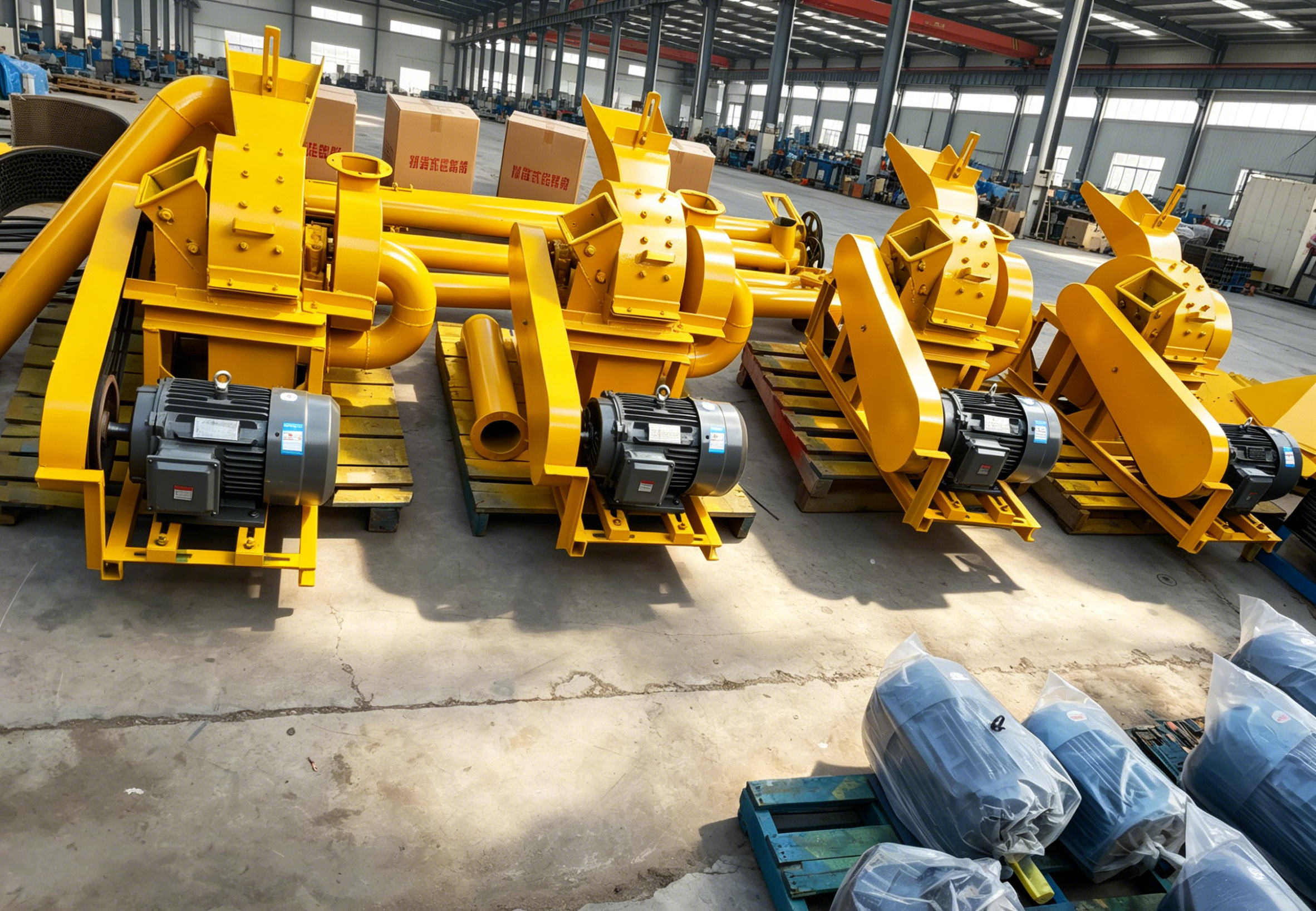
A tree clearing contractor in Southeast Asia handled a highway expansion project covering 12 hectares. The site contained dense roots, storm-fallen trees, and construction leftovers.
The grinder was configured with:
- reinforced rotor system
- hydraulic feeding rollers
- wear-resistant alloy blades
Problem encountered: root sections with embedded stones caused blade chipping within the first week.
Solution:
A pre-sorting stage was introduced using excavators to shake off soil before feeding.
Outcome:
Daily processing capacity stabilized at 35–40 tons.
3. Engineering Application Case 2
A European biomass operator integrated pallet waste from logistics warehouses into pellet production.
Setup included:
- wood grinder
- magnetic separator
- hammer mill secondary crushing
Key observation: inconsistent pallet dimensions caused uneven feeding speed.
Adjustment: operator standardized pallet stacking before feeding.
Result: stable chip size improved pellet density consistency.
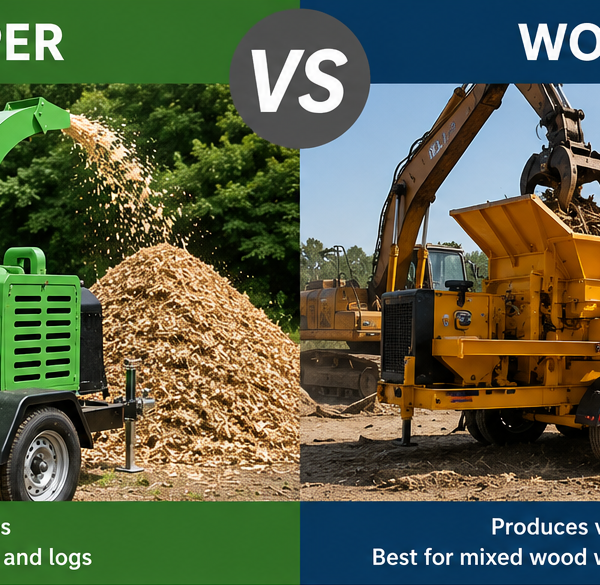
4. Product Comparison
| Item | Drum Chipper | Heavy-duty Grinder |
|---|---|---|
| Feed type | Logs, uniform wood | Mixed waste |
| Output | Long chips | Irregular chips |
| Tolerance | Low contamination | High contamination |
| Maintenance | Lower | Higher but more flexible |
Selection logic:
- clean forestry → drum chipper
- mixed waste → grinder
5. Procurement Risk Analysis
A frequent issue in overseas orders is voltage mismatch. Many buyers request 380V 50Hz machines but local grids operate at 480V or unstable 60Hz systems.
Other risks include:
- misunderstanding of material type (clean wood vs mixed waste)
- underestimating metal contamination
- lack of spare blade planning
One case involved a South American buyer who did not specify nail content in pallets, leading to blade failure within 10 days.
6. Export Delivery Experience
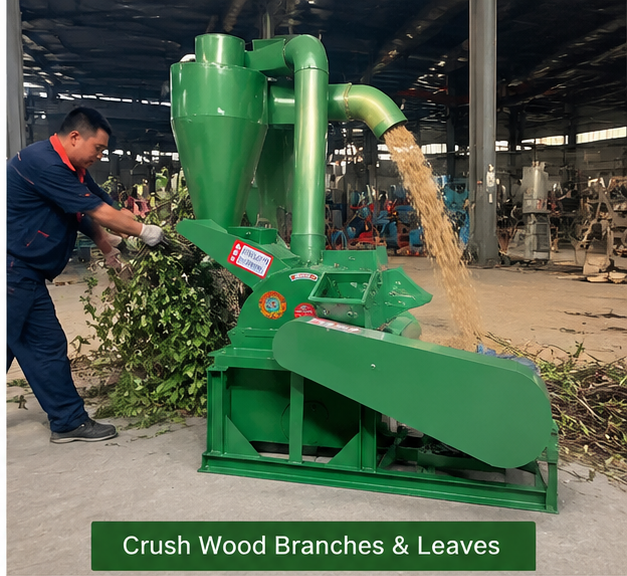
For land clearing machines shipped to North America and Europe, packaging strategy directly affects arrival condition.
Standard export process includes:
- steel frame base fixing
- moisture-proof wrapping
- rotor locking before shipment
Container loading must consider machine center of gravity to avoid vibration damage.
7. FAT & Routine Test
Before shipment, FAT includes:
- continuous 2–4 hour wood feeding test
- overload protection check
- blade temperature monitoring
- vibration level inspection
Buyers from Europe often require video-based FAT confirmation with real material, not dummy wood blocks.
FAQ
Q1: Can the grinder handle soil-contaminated roots?
Yes, but blade wear increases significantly. Pre-cleaning is recommended.
Q2: What materials shorten blade life most?
Nails, stones, and mixed construction debris.
Q3: Is secondary crushing necessary?
For biomass pellet production, yes. It improves particle uniformity.
Call To Action
If your operation involves mixed wood waste, storm debris, or pallet recycling, selecting the right grinder configuration determines both maintenance cost and output stability. Share your material type and capacity target to receive a tailored equipment layout and configuration suggestion.