Your position:
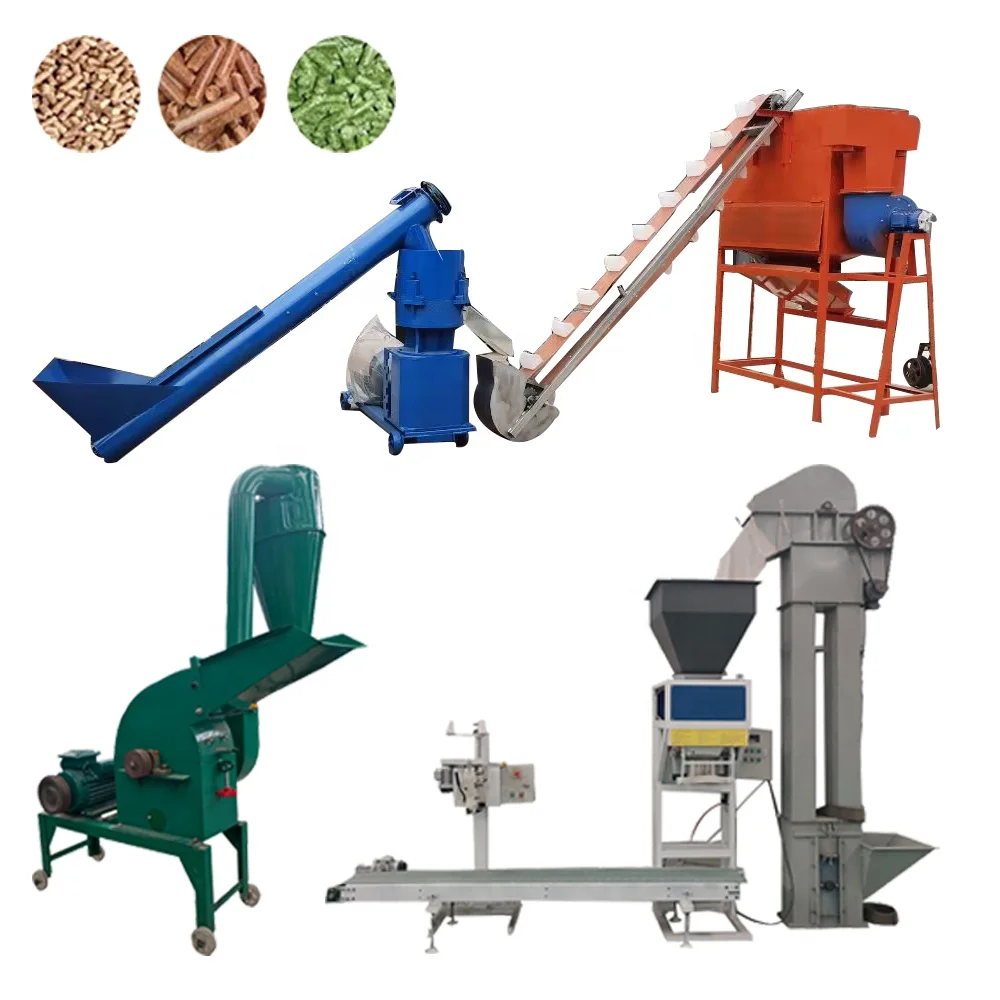
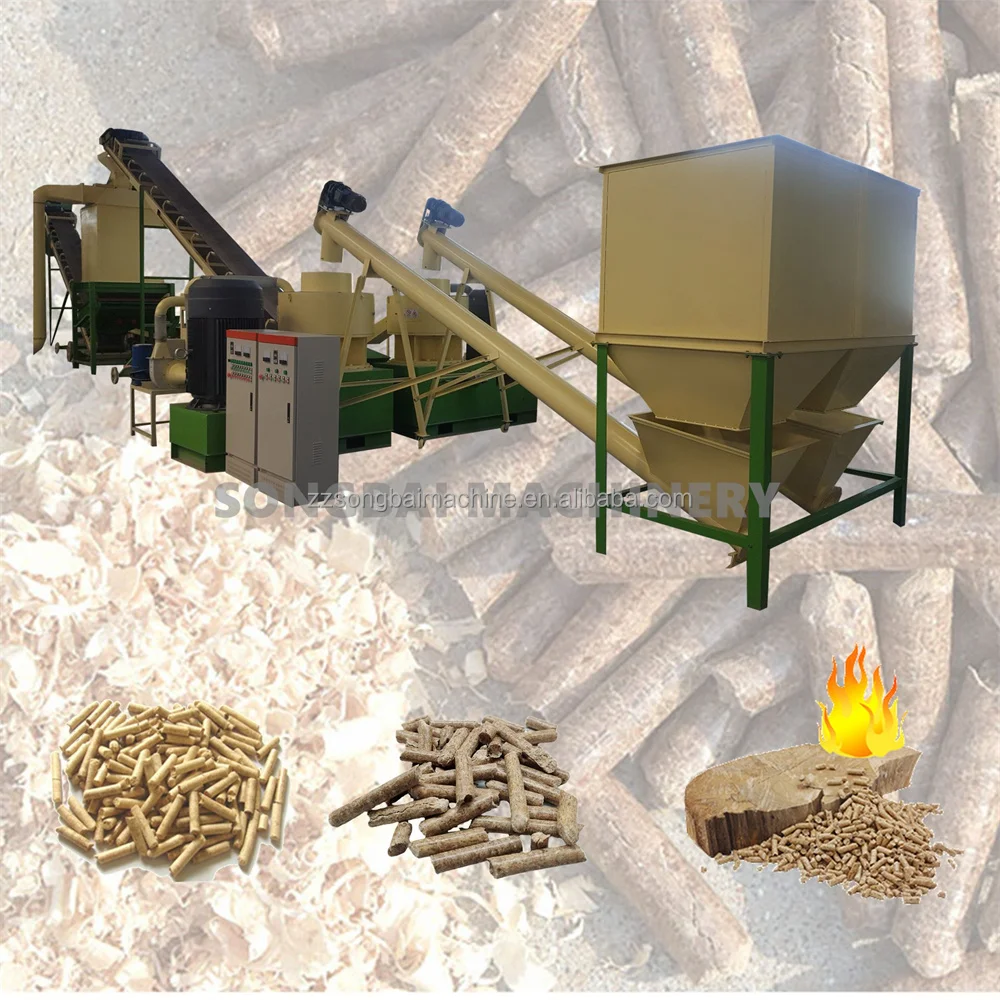
PRODUCTS LIST
Last News
Inquiry
Introduction
Product Description
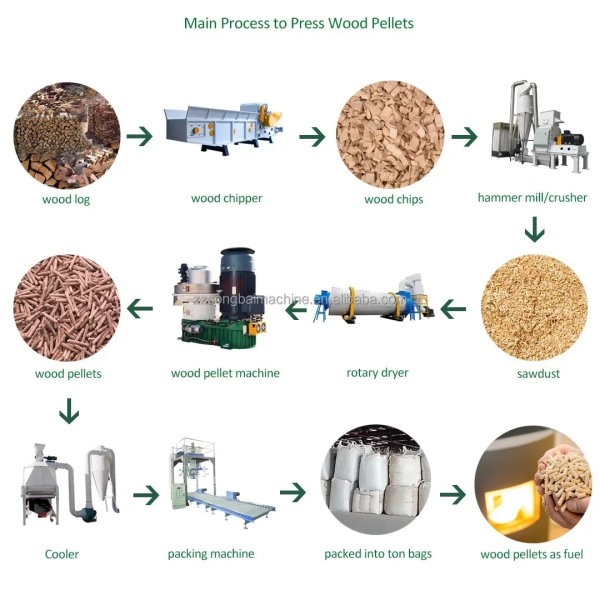
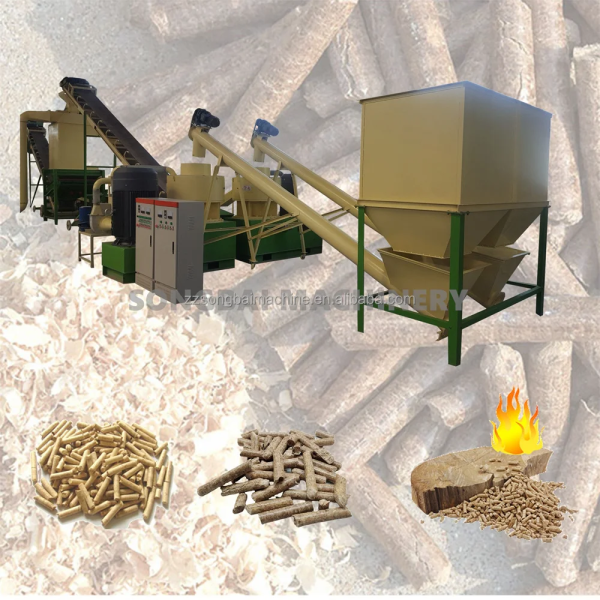
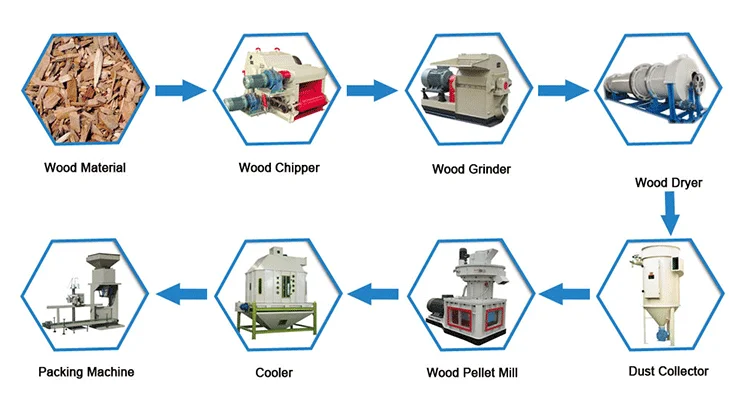
A wood pellet production line is a complete system of interconnected equipment designed to convert raw wood materials – such as logs, branches, wood chips, and sawdust – into high-quality wood pellets. The process typically includes chipping, drying, grinding, pelletizing, cooling, screening, and packing stages, with each component carefully matched to ensure optimal efficiency and product quality. Available in configurations ranging from 1 ton per hour to over 15 tons per hour, our wood pellet production lines offer turnkey solutions for small-scale operations, commercial producers, and large industrial plants alike – delivering consistent, premium-grade pellets suitable for heating, industrial boilers, and biomass power generation.
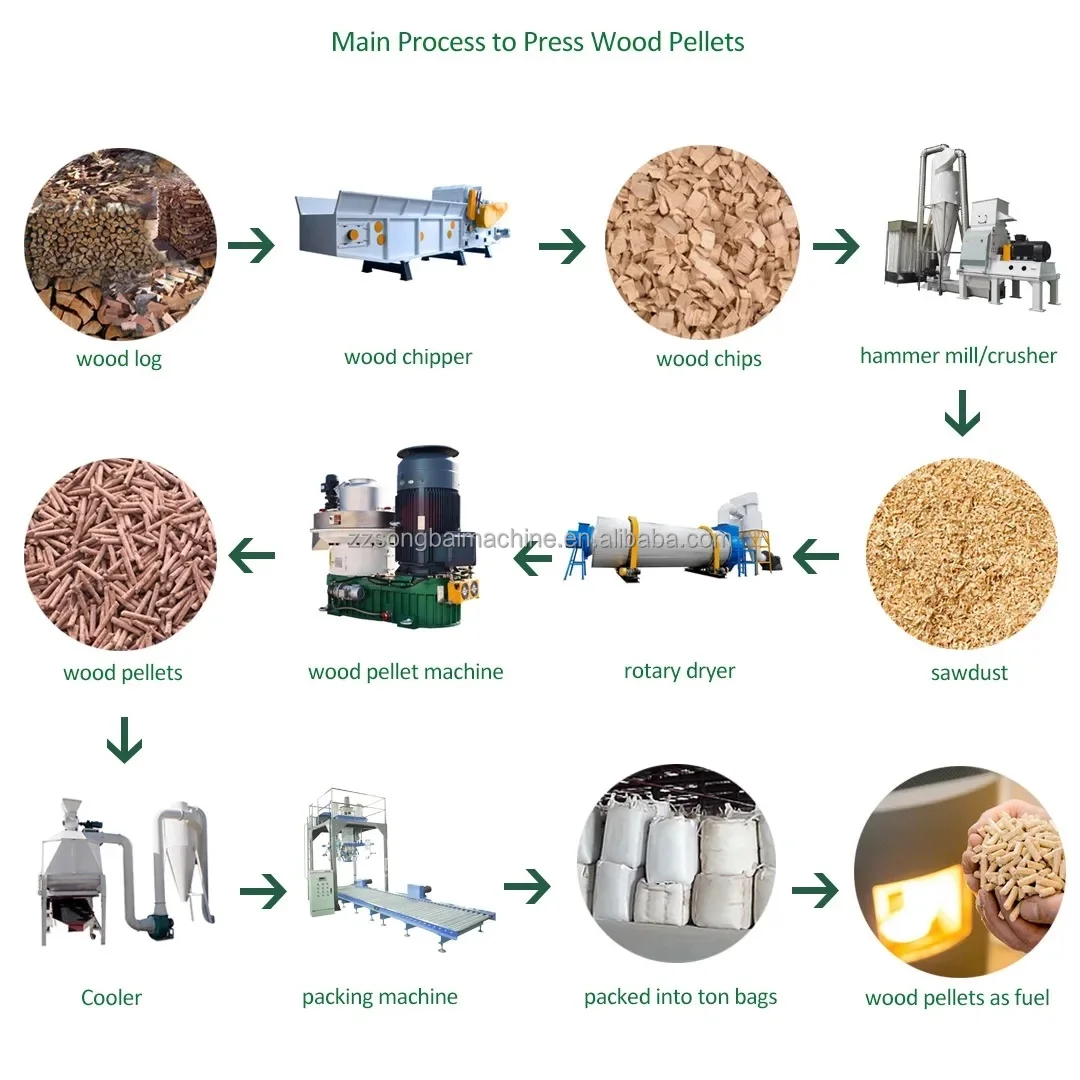
Wood Pellet Production Process – Step by Step
| Stage | Equipment | Function |
|---|---|---|
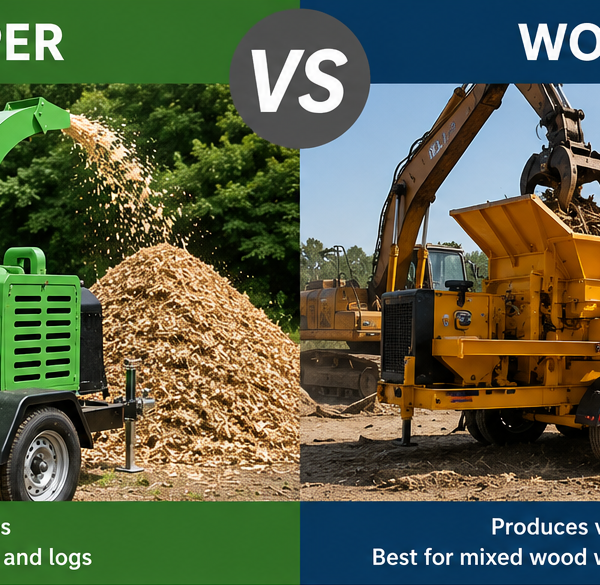
| 1. Raw material preparation | Wood chipper / Log debarker | Reduces logs and large branches into wood chips |
| 2. Grinding | Hammer mill / Wood crusher | Grinds wood chips into fine sawdust (3-5mm) |
| 3. Drying | Rotary dryer / Air dryer | Removes excess moisture to 10-15% for optimal pelletizing |
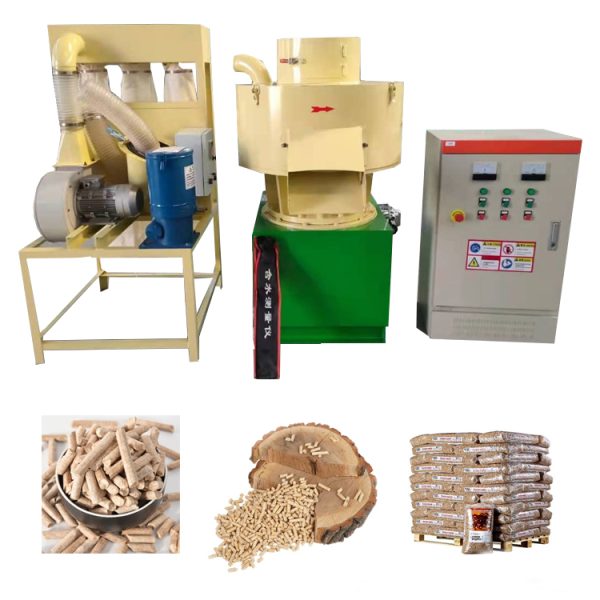
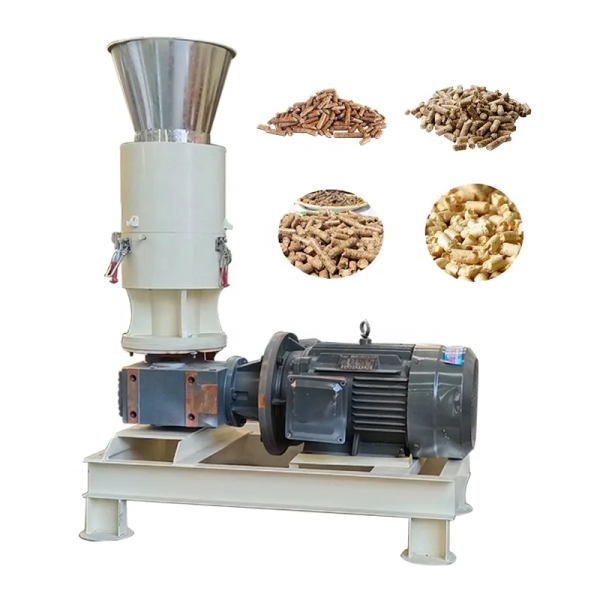
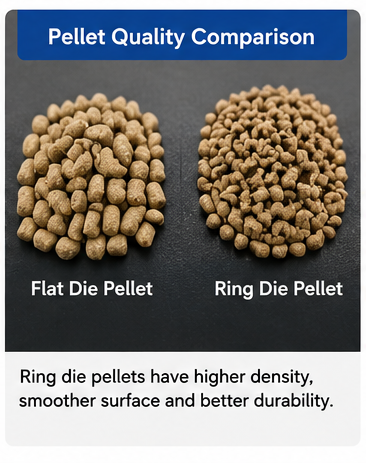
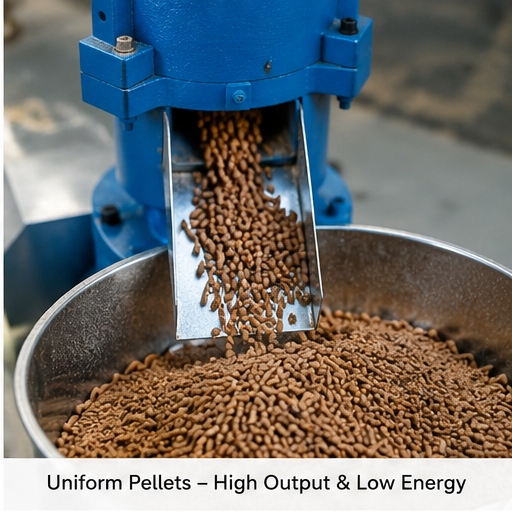
| 4. Pelletizing | Ring die / Flat die pellet mill | Compresses sawdust into dense, uniform pellets |
| 5. Cooling | Counterflow pellet cooler | Cools hot pellets and removes surface moisture |
| 6. Screening | Pellet screener / Vibrating screen | Removes fines and oversized particles for quality control |
| 7. Packing | Automatic packing machine | Weighs, bags, and seals pellets for storage and transport |
Optional stages: magnetic separation, pre-conditioning, coating, and silo storage can be integrated as needed.
Key Features
-
Complete turnkey solution – integrated equipment from raw material intake to finished bagged pellets; single-supplier responsibility.
-
Customizable capacity – production lines available from 1-2 t/h for small operations up to 10-15+ t/h for industrial plants.
-
Modular design – flexible layout options to fit existing facilities; easy future expansion.
-
PLC automatic control – centralized control panel with touchscreen interface; minimizes labor requirements and ensures consistent operation.
-
Energy-efficient drying – optional heat recovery system reduces fuel consumption for rotary dryer.
-
Ring die pellet mill core – gear-driven industrial pellet mill with stainless steel die delivers high output and excellent pellet quality.
-
Durable construction – heavy-duty components designed for continuous 24/7 operation.
-
CE certification – complies with international safety and quality standards.
-
Comprehensive after-sales support – installation guidance, commissioning, training, and spare parts supply.
What Raw Materials Can Be Processed?
| Category | Examples |
|---|---|
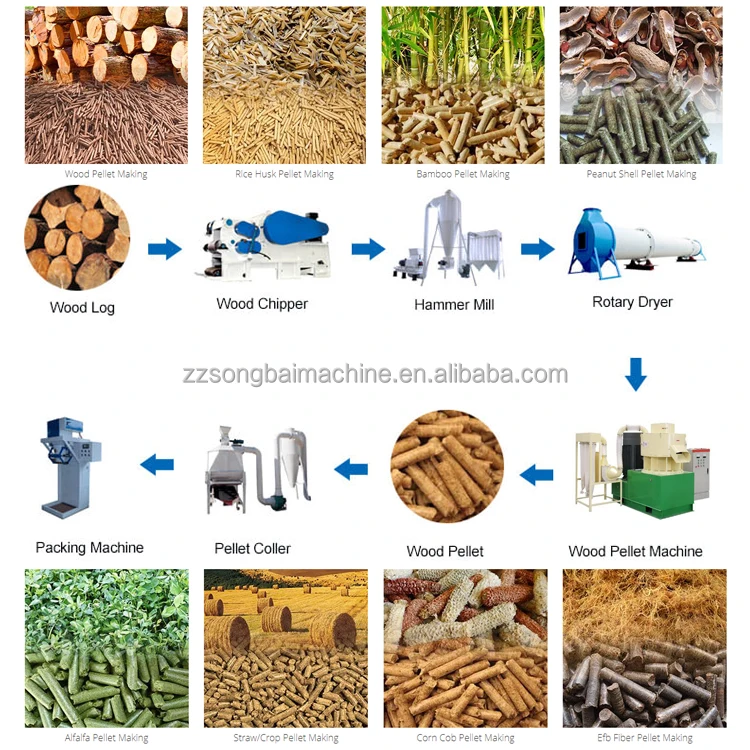
| Wood residues | Logs, branches, wood chips, sawdust, planer shavings, bark |
| Forest waste | Thinning, harvesting residues, tree trimmings |
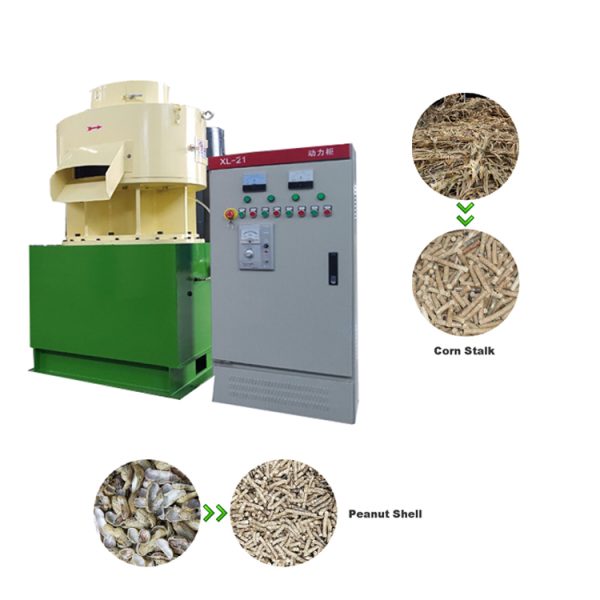
| Agricultural residues | Straw, rice husk, corn stalks, peanut shells, palm kernel shells |
| Others | EFB (empty fruit bunches), bamboo, bagasse, cotton stalks |
Note: Different raw materials require specific processing parameters. A properly configured line can handle multiple materials with appropriate adjustments.
Common Applications for Finished Pellets
-
Residential heating – pellets for stoves, fireplaces, and central heating systems.
-
Industrial boilers – fuel for steam generation, drying, and manufacturing processes.
-
Biomass power plants – renewable fuel for electricity generation.
-
Animal bedding – high-quality dust-free wood pellet bedding for horses and livestock.
-
Export markets – standardized pellets meeting ENplus, DINplus, or PFI specifications.
Why Choose a Complete Wood Pellet Production Line?
-
One-stop solution – eliminates the complexity of sourcing components from multiple suppliers.
-
Optimized efficiency – each component is matched for seamless integration and maximum throughput.
-
Consistent pellet quality – controlled process from raw material to finished product ensures premium pellets every time.
-
Lower operating costs – efficient drying and pelletizing reduce energy consumption per ton.
-
Labor savings – automatic controls minimize manual intervention across the entire line.
-
Scalability – modular design allows capacity expansion as your business grows.
-
Regulatory compliance – engineered to meet international emissions and safety standards.
How to Choose the Right Wood Pellet Production Line
-
Target capacity – determine your desired output: 1-3 t/h for small commercial; 4-8 t/h for medium-scale; 10-15+ t/h for large industrial plants.
-
Raw material type – different materials require different processing equipment; confirm your material and moisture content.
-
Finished pellet standard – ENplus or DINplus certification may require specific equipment specifications and quality control systems.
-
Facility space – consider building dimensions, ceiling height, and layout for equipment placement.
-
Power availability – confirm voltage and power capacity for all electrical components.
-
Moisture management – if raw material is high in moisture, a larger dryer or additional drying capacity is needed.
-
Automation level – choose between semi-automatic (individual machine operation) or fully automatic PLC-controlled line.
-
Budget – consider both capital investment and long-term operating costs; higher initial investment often delivers better ROI.
-
After-sales support – select a supplier with proven installation, training, and spare parts service capability.
Maintenance Tips
-
Daily maintenance – check lubricant levels on all rotating equipment; inspect belts and fasteners; clean dust collectors and filters.
-
Weekly maintenance – inspect pellet mill die and rollers for wear; check dryer burner operation and air flow; test safety sensors.
-
Monthly maintenance – service gearboxes with oil change per schedule; inspect screw conveyors and elevators; calibrate weighing systems.
-
Quarterly maintenance – comprehensive inspection of all electrical and mechanical systems; replace worn hammer mill hammers and screens.
-
Annual maintenance – complete system audit; replace ring die and roller shells as needed; review PLC software updates.
-
Record keeping – maintain logs of production, maintenance activities, and spare parts consumption for predictive maintenance planning.
Safety Guidelines
-
Provide comprehensive training – ensure all operators are fully trained on the entire production line and understand emergency procedures.
-
Install proper guarding – all moving parts, belts, and conveyors should be guarded to prevent accidental contact.
-
Implement lockout/tagout – establish and enforce LOTO procedures for all maintenance activities.
-
Monitor dust levels – install dust control and explosion prevention systems as wood dust is combustible.
-
Maintain emergency stops – ensure emergency stop buttons are accessible at every key point on the line.
-
Fire detection – install heat and smoke detectors, especially near dryers and pellet mills.
-
PPE requirements – require safety glasses, hearing protection, dust masks, and steel-toe boots in the production area.
-
Clear signage – post safety warnings, operating instructions, and emergency contact information prominently.
Inquiry
Please feel free to submit your inquiry information to us. We will contact with you as soon as possible.