Your position:
PRODUCTS LIST
Last News
Inquiry
Introduction
Product Description
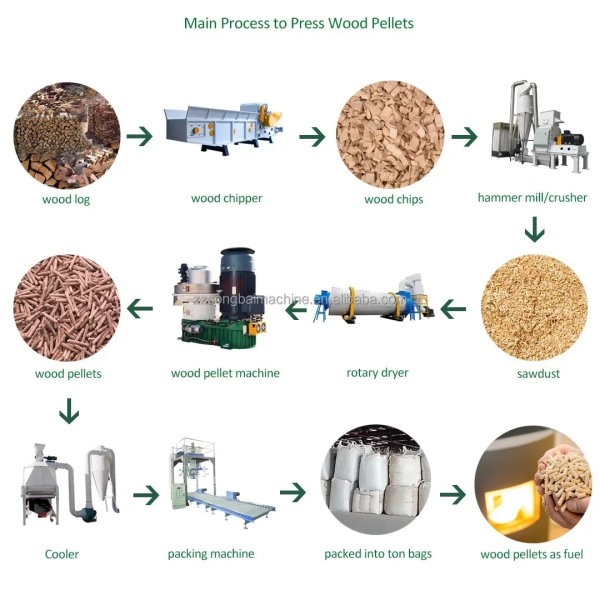
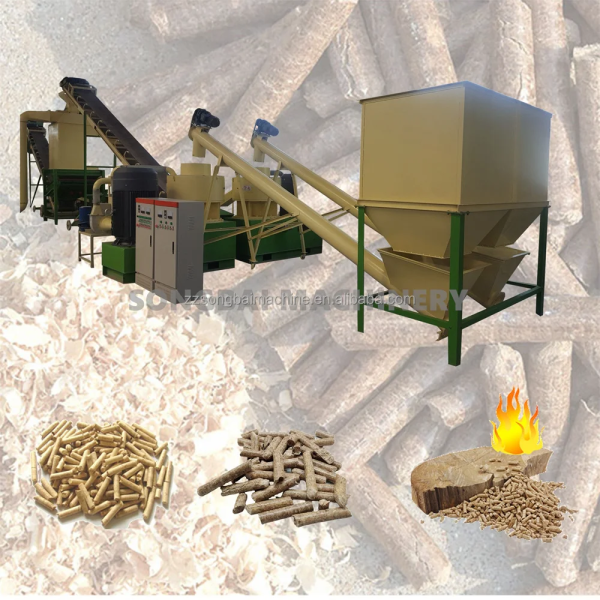
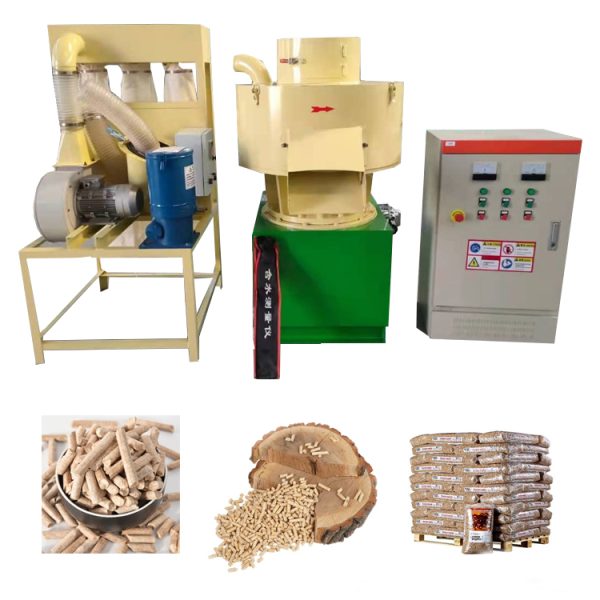
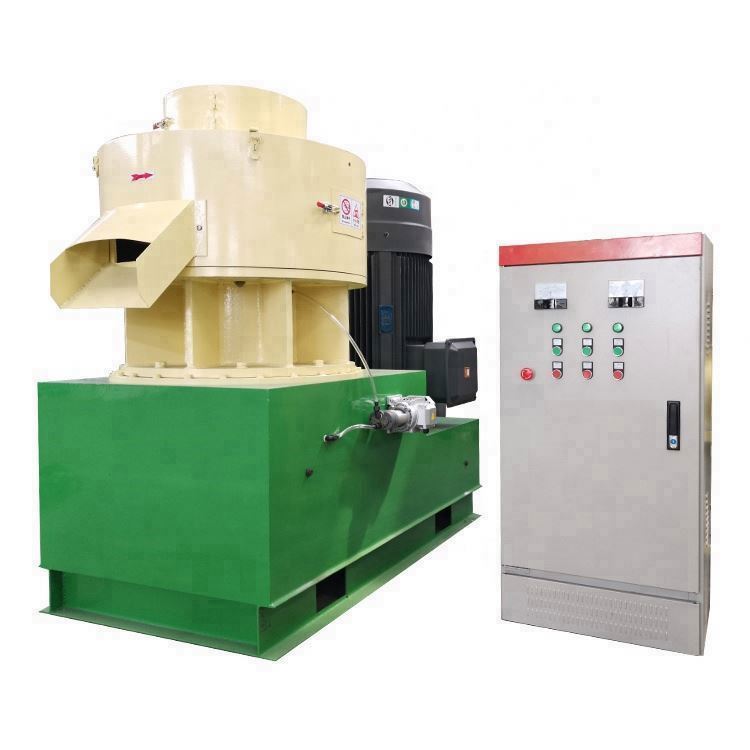
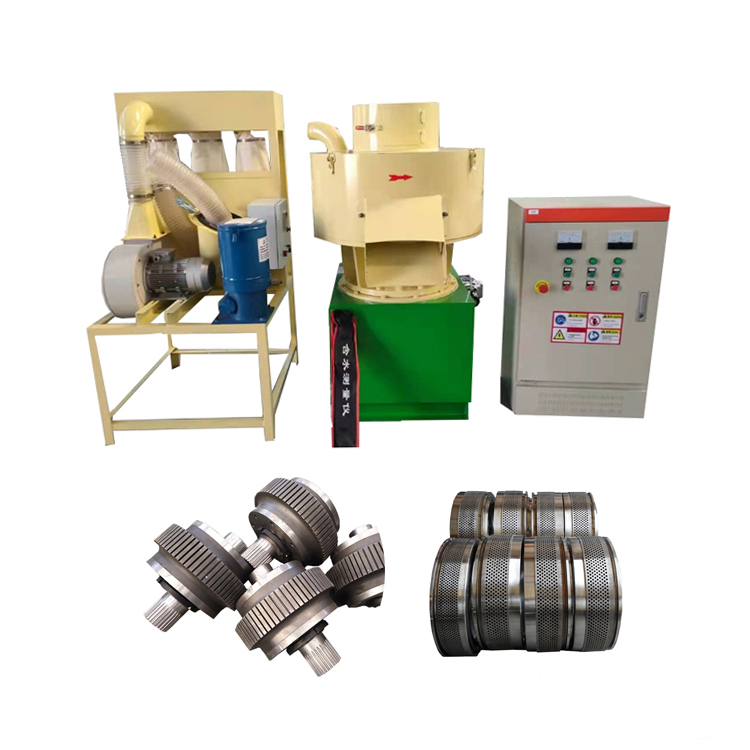
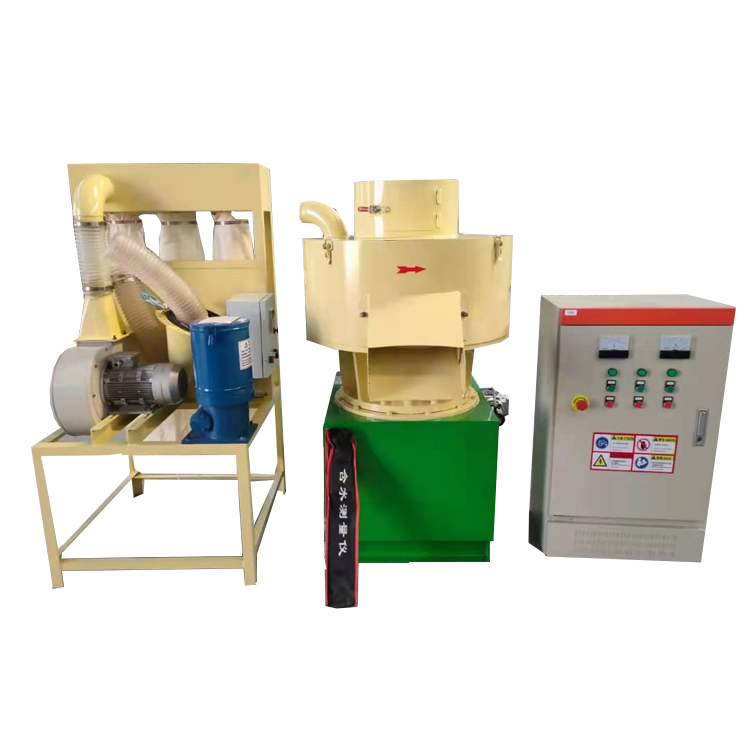
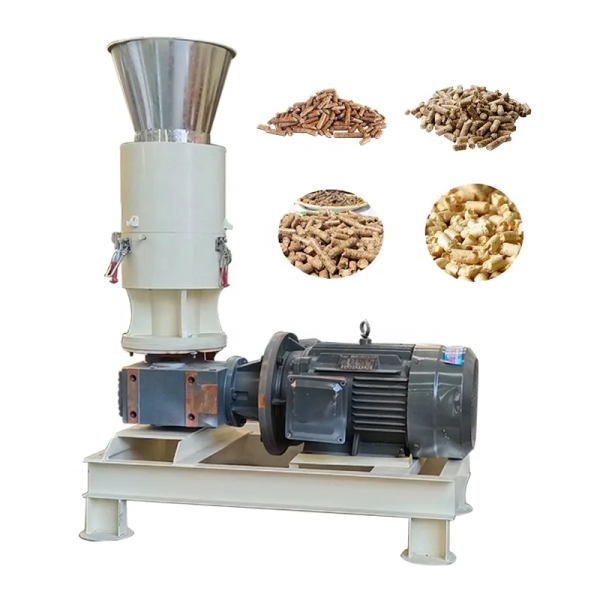
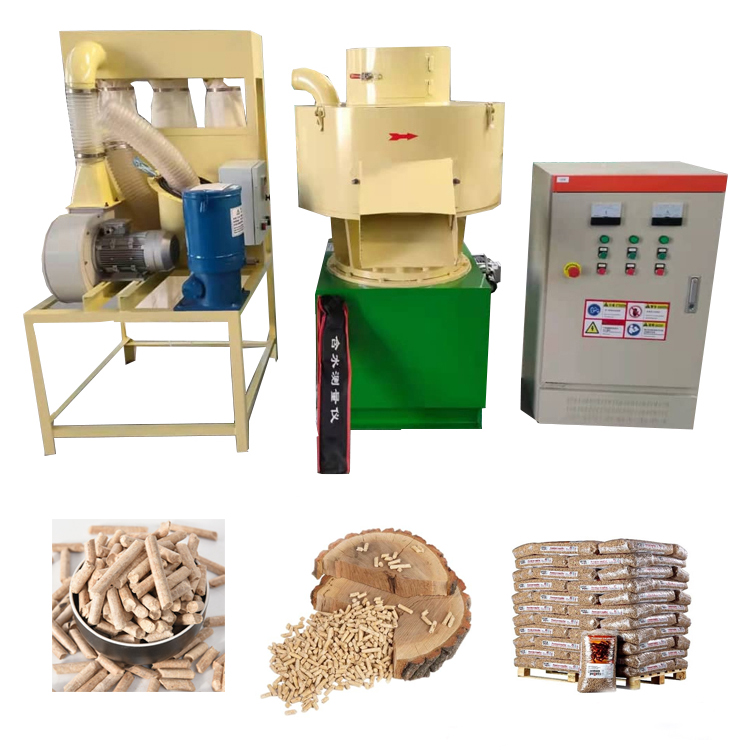
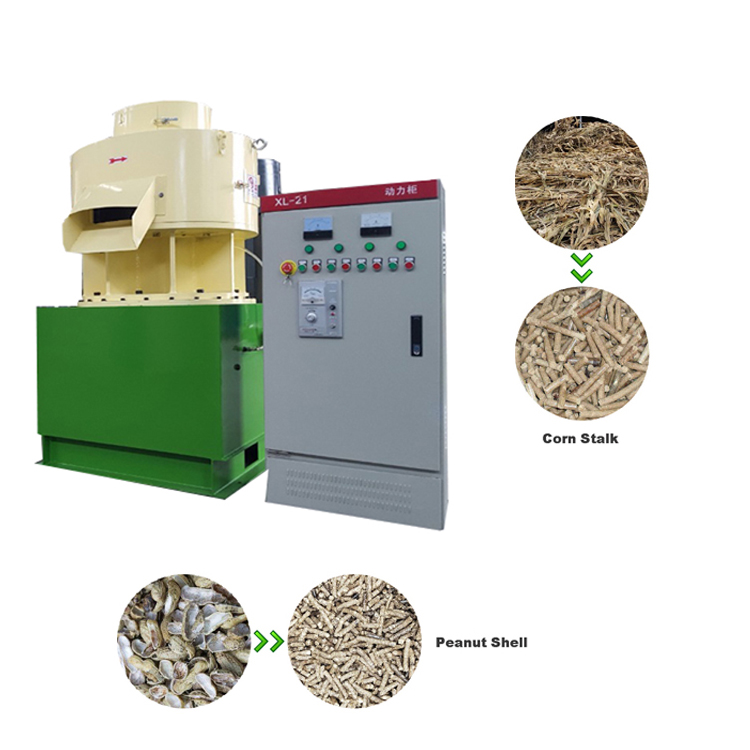
A ring die wood pellet machine is a high-efficiency industrial pellet mill designed for large-scale production of wood pellets from sawdust, wood chips, wood shavings, and other woody biomass materials. Utilizing a vertical ring die compression system with gear drive transmission, the machine delivers consistent, high-density pellets with exceptional durability and low breakage rate. Available in both electric motor and diesel engine configurations, ring die wood pellet machines are the preferred choice for commercial pellet production, biomass energy plants, and large-scale agricultural operations requiring continuous, high-output performance.
Key Features
-
Ring die compression system – vertical ring die design with precision-machined die holes ensures uniform pellet density and high output efficiency.
-
Gear drive transmission – direct gear drive delivers up to 98% power transmission efficiency, outperforming belt-driven systems with less energy loss and lower maintenance.
-
Stainless steel die & rollers – high-quality alloy construction offers superior wear resistance and extended service life.
-
Integrated feeder & conditioner – ensures uniform material flow and optimal steam conditioning for consistent pellet quality.
-
Heavy-duty main shaft – forged steel construction handles continuous heavy loads with minimal deflection.
-
Automatic lubrication system – maintains optimal bearing and roller lubrication during operation, reducing downtime.
-
Overload protection – prevents damage from foreign objects or excessive material feed.
-
Electric motor / diesel engine options – electric for fixed indoor installations; diesel for remote sites or areas with unreliable power.
-
High capacity output – production ranges from 1 to 15+ tons per hour, suitable for commercial and industrial applications.
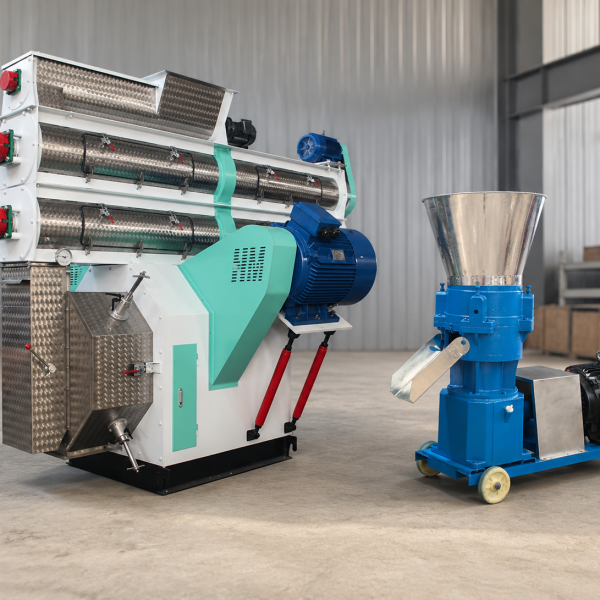
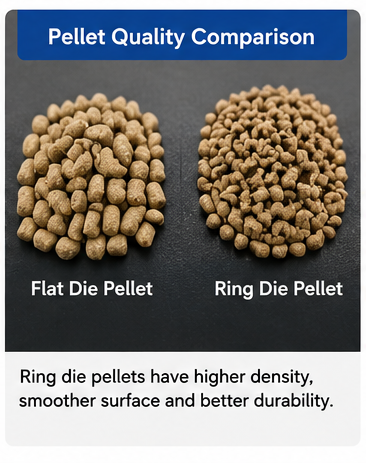
Ring Die vs. Flat Die – What’s the Difference?
| Feature | Ring Die Wood Pellet Machine | Flat Die Wood Pellet Machine |
|---|---|---|
| Die Shape | Vertical cylindrical ring | Flat horizontal disc |
| Capacity | 1-15+ tons/hour | 50-800 kg/hour |
| Compression Efficiency | High – uniform roller pressure | Moderate – pressure varies across die |
| Power Efficiency | Up to 98% (gear drive) | Lower (belt or direct drive) |
| Scale | Commercial & industrial | Small-scale, residential, farm |
| Automation | Fully automatic | Semi-automatic or manual |
| Price Range | Higher ($10,000-$150,000+) | Lower ($500-$10,000) |
| Best For | Large-scale production | Home use, small farms, startups |
What Materials Can Be Processed?
| Category | Examples |
|---|---|
| Wood residues | Sawdust, wood chips, planer shavings, wood shavings, bark |
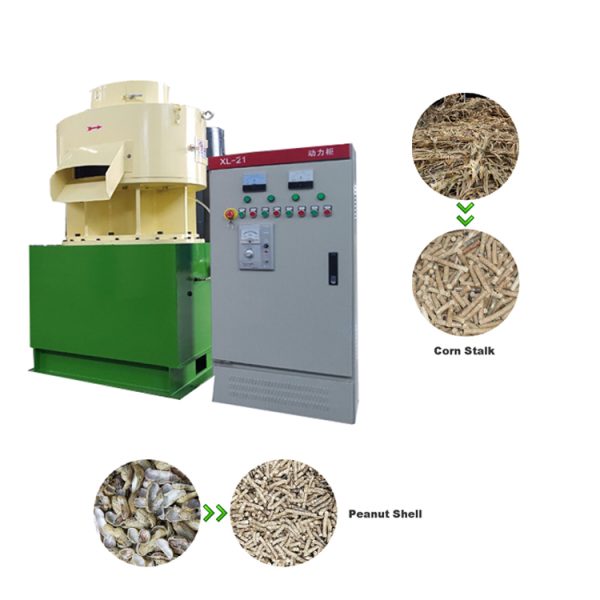
| Agricultural residues | Straw, rice husk, corn stalks, wheat straw, cotton stalks, peanut shells |
| Nut shells | Palm kernel shells, coconut shells, almond shells, walnut shells |
| Others | Bamboo, bagasse, EFB (empty fruit bunches), grass |
Note: For optimal pellet quality, material moisture should be 12-18% and particle size 3-5mm. Pre-grinding and drying equipment may be required.
Common Applications
-
Commercial pellet production – large-scale manufacturing for wholesale and retail fuel markets.
-
Biomass power plants – supply fuel pellets for renewable energy generation.
-
Industrial heating – provide high-quality fuel for industrial boilers, dryers, and kilns.
-
Animal feed production – produce uniform feed pellets for poultry, livestock, and aquaculture.
-
Waste management – convert sawmill and agricultural waste into valuable fuel products.
-
Export markets – produce pellets meeting international quality standards for overseas buyers.
Why Choose a Ring Die Wood Pellet Machine?
-
High capacity – produces large volumes to meet commercial demand efficiently.
-
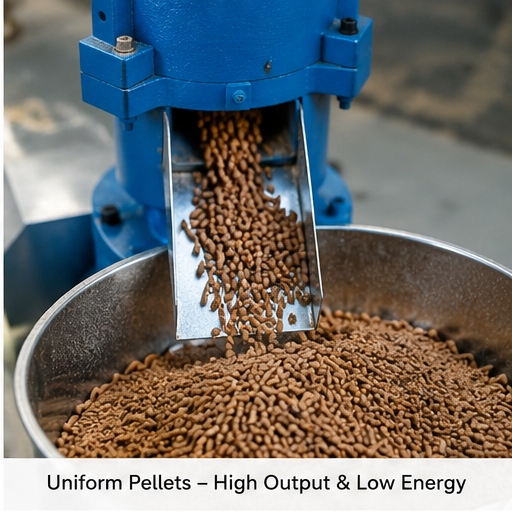
Superior pellet quality – consistent density, uniform size, and low fines for excellent combustion.
-
Energy efficient – gear drive technology reduces power consumption per ton of pellets.
-
Continuous operation – designed for 24/7 production with minimal downtime.
-
Low maintenance – durable components and automatic lubrication reduce service frequency.
-
Versatile material handling – processes a wide range of woody and agricultural biomass.
-
Long service life – stainless steel die and rollers provide extended wear life.
-
Better return on investment – higher output and lower operating costs deliver faster payback.
How to Choose the Right Ring Die Wood Pellet Machine
-
Capacity requirements – select model based on your target hourly output (t/h). Small commercial: 1-3 t/h; medium: 4-8 t/h; large: 9-15+ t/h.
-
Raw material type – confirm machine compatibility with your specific biomass materials.
-
Moisture content – ensure you have drying capability if raw material exceeds 18% moisture.
-
Particle size – verify your grinding equipment can achieve 3-5mm particle size.
-
Die specification – select die hole diameter (6mm, 8mm, 10mm) and compression ratio based on your target pellet quality.
-
Power source – electric motor for fixed installations; diesel engine for remote or off-grid sites.
-
Transmission type – gear drive for maximum efficiency and lower maintenance; belt drive as a lower-cost alternative.
-
Automation level – choose between manual control or fully automatic PLC-controlled systems.
-
After-sales service – choose a supplier with reliable spare parts availability and technical support.
Maintenance Tips
-
Regularly inspect die and rollers – check for wear patterns; replace when ring die reaches recommended service life or when output drops.
-
Monitor bearing temperature – excessive heat indicates lubrication issues or bearing wear; investigate promptly.
-
Maintain proper lubrication – follow automatic system refill schedule and check grease levels daily.
-
Check gearbox oil level – maintain proper oil level and change per manufacturer schedule.
-
Inspect belts and couplings – check for wear and proper alignment; replace when loose or damaged.
-
Keep machine clean – remove dust and debris from the machine body and motor area to prevent overheating.
-
Check fasteners regularly – vibration may loosen bolts; tighten as needed.
-
Monitor pellet quality – sudden changes in pellet density or appearance indicate die wear or conditioning issues.
-
Schedule die rotation – rotate die 90-120 degrees periodically for even wear distribution.
-
Store spare parts – keep a spare ring die, roller shells, and bearings on hand to minimize downtime.
Safety Guidelines
-
Wear full protective equipment – safety glasses, hearing protection, dust mask, heavy-duty gloves, and steel-toe boots are essential.
-
Lockout/tagout before maintenance – always disconnect power and lock out the main switch before servicing.
-
Keep hands clear – never reach into feed hopper or press area while the machine is running.
-
Clear the area – keep unauthorized personnel, children, and pets away from the operating zone.
-
Inspect feed material – remove stones, metal, and other contaminants to prevent catastrophic die damage.
-
Do not exceed capacity – overfeeding can damage the gearbox, rollers, and motor.
-
Wait for full stop – allow all moving parts to come to a complete stop before cleaning or inspection.
-
Ventilation – operate in well-ventilated areas, especially with diesel engines, to avoid fume accumulation.
-
Emergency stop – familiarize yourself with the emergency stop location and test it regularly.
-
Read the manual – ensure all operators are fully trained on controls and safety procedures before use.
Inquiry
Please feel free to submit your inquiry information to us. We will contact with you as soon as possible.