Your position:
PRODUCTS LIST
Last News
Inquiry
Introduction
Product Description:
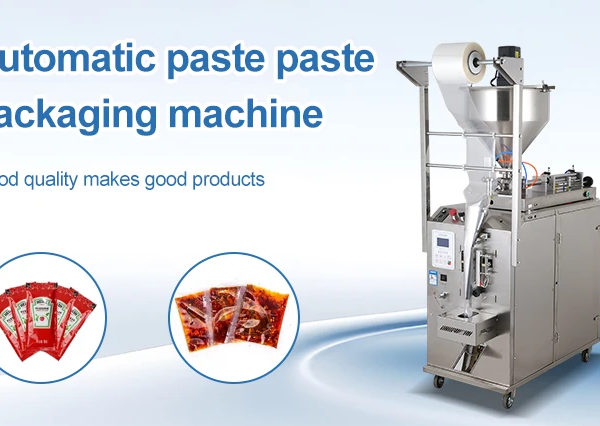
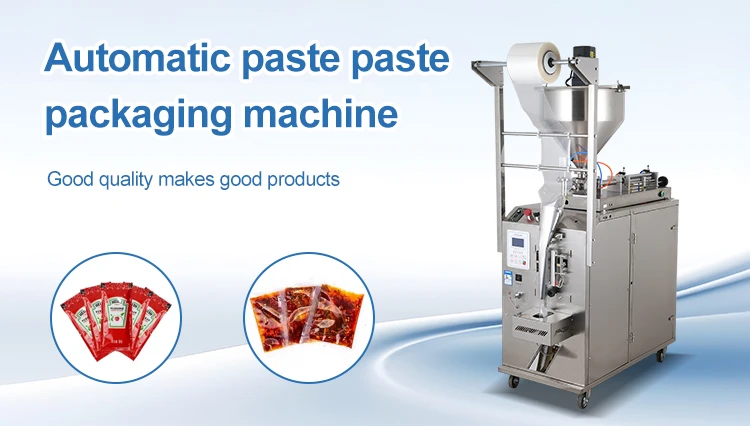
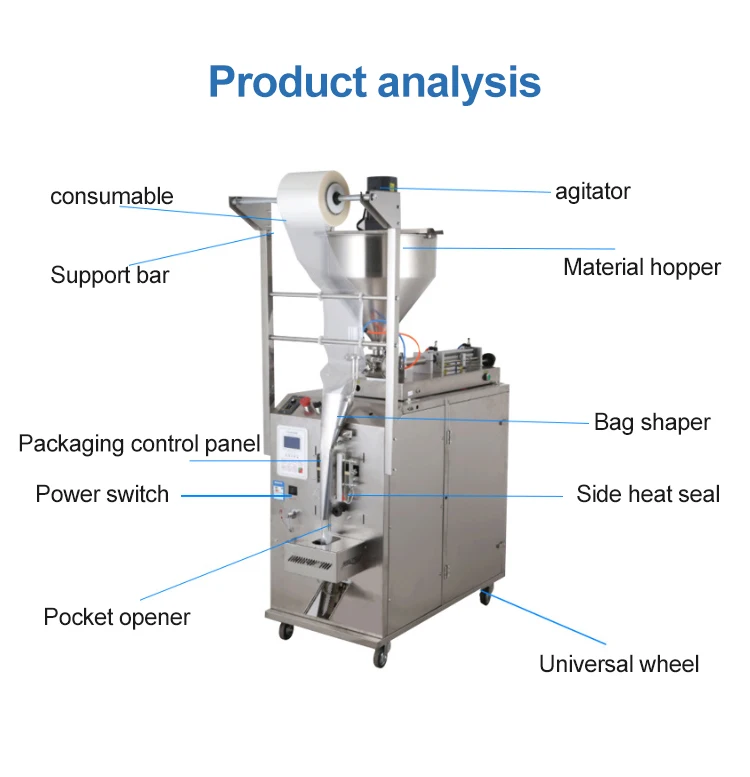
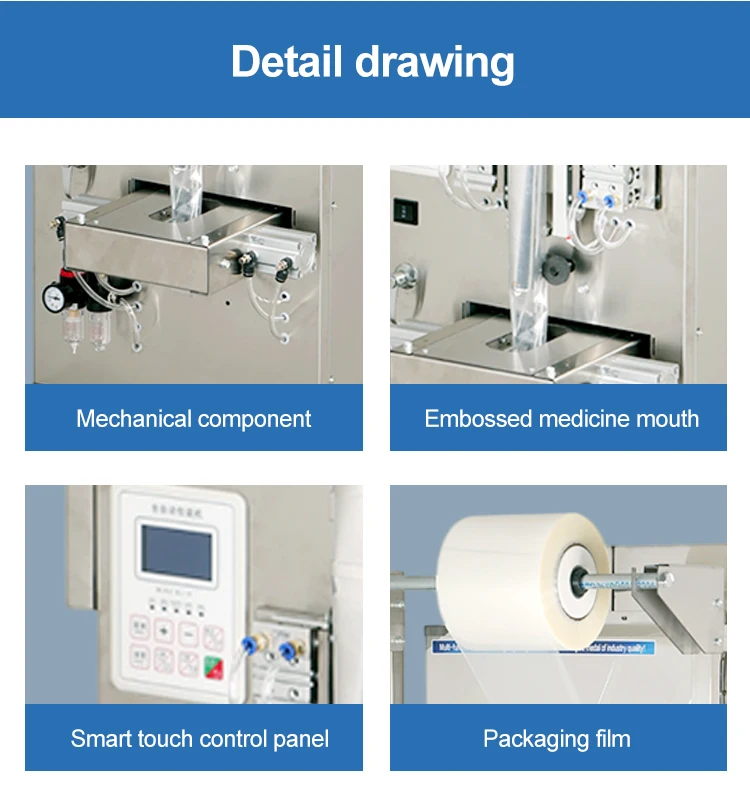
An automatic paste packaging machine is a fully automated system designed to fill and seal high‑viscosity products into sachets, pouches, or stick packs – with no manual intervention. It handles thick materials like tomato paste, chili sauce, jam, honey, peanut butter, cream, lotion, shampoo, toothpaste, and ointments. From film roll to finished bag, the entire process is automatic: film forming, filling, sealing, cutting, and discharge.
Key features of automatic models
-
Fully automatic operation – one operator can run 2–3 machines.
-
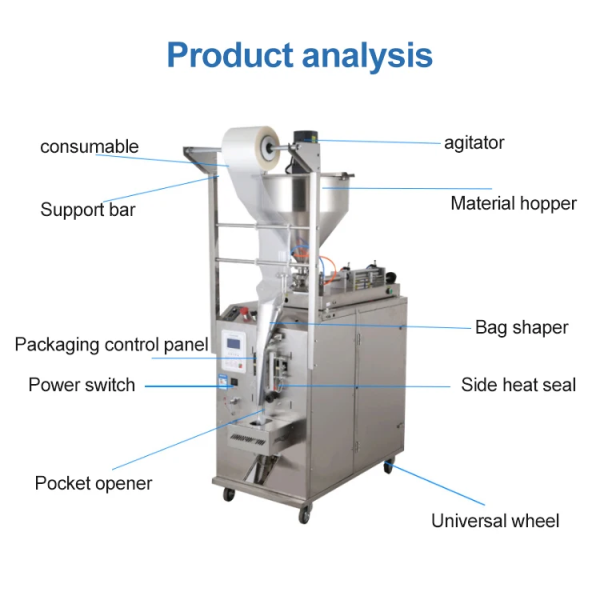
Piston (cylinder) filler – provides accurate, consistent dosing for thick pastes (accuracy ±1%).
-
Stainless steel contact parts (SUS304) – food grade, corrosion resistant, easy to clean.
-
Hopper with agitator – prevents settling, separation, or clogging.
-
Optional heated hopper – keeps paste fluid (for honey, chocolate, coconut oil).
-
Optional particle‑friendly filling system – handles products with seeds, fruit pieces, or pulp (e.g., jam with fruit chunks).
-
Anti‑drip nozzle – prevents messy tails after filling.
-
High speed – 20–80 bags/min (depends on model and bag size).
-
Multiple bag styles – 3‑side seal, 4‑side seal, back seal (pillow), stick pack.
-
Photo‑eye registration – ensures printed film aligns correctly for cutting.
-
Date coder / inkjet printer (optional) – prints batch number and expiry date on each bag.
Typical automatic applications
| Industry | Products | Typical bag type |
|---|---|---|
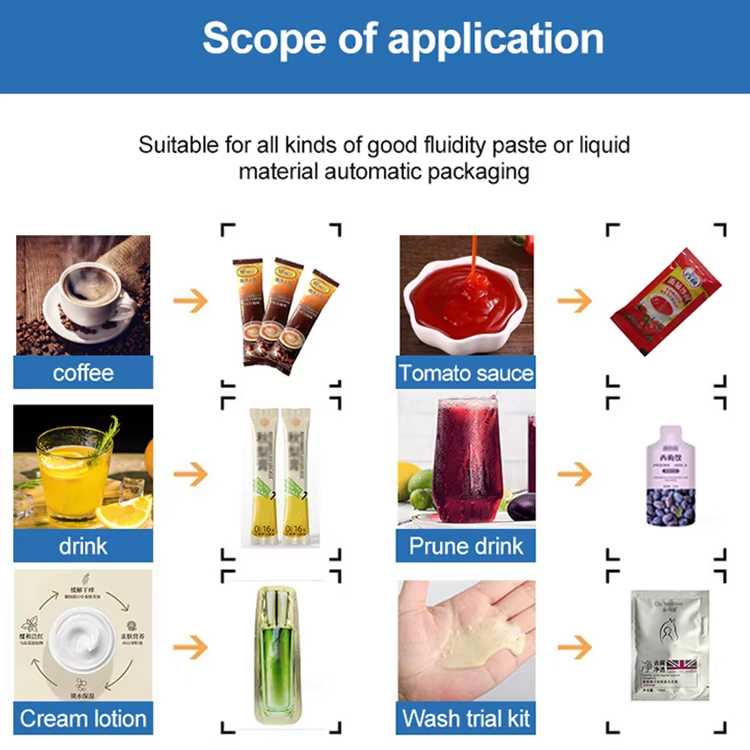
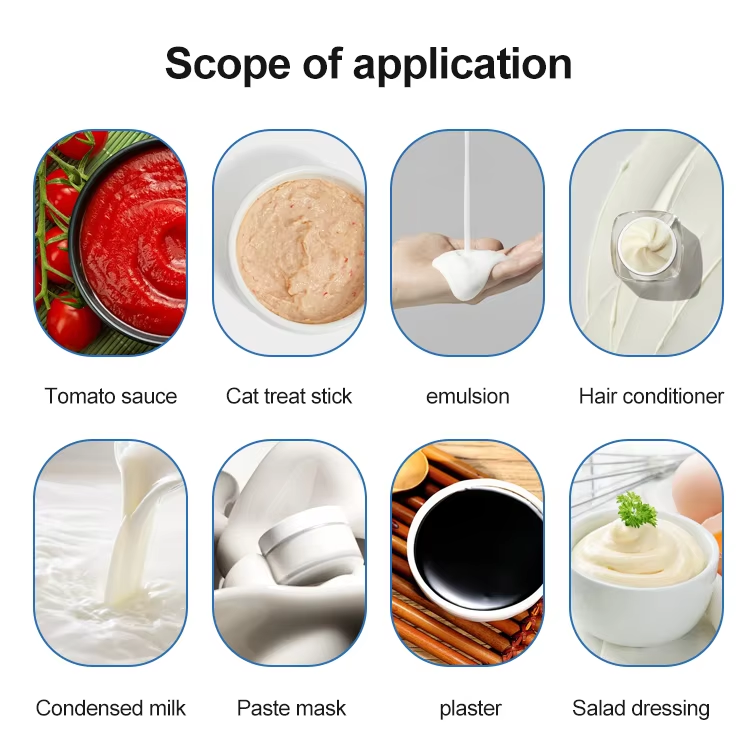
| Food | Tomato paste, chili sauce, oyster sauce, soy sauce (thick), jam, honey, peanut butter, chocolate spread, condensed milk, salad dressing, mayonnaise | 3‑side seal, stick pack |
| Food | Ketchup, mustard, BBQ sauce, cooking oil (small packs) | 3‑side seal, back seal |
| Cosmetic | Cream, lotion, shampoo, shower gel, conditioner, facial cleanser, hand wash | 3‑side seal, pouch |
| Pharmaceutical | Toothpaste, ointment, medical gel, oral liquid, eye drops (viscous) | 3‑side seal, tube‑style |
| Other | Glue, adhesive, sealant, paint samples, lubricant | 3‑side seal, stick pack |
Bag styles produced
This machine can produce various bag styles:
| Bag style | Description | Best for |
|---|---|---|
| 3‑side seal | Sealed on 3 sides, open on top for filling – cheapest, fastest | Most products |
| 4‑side seal | Sealed on all 4 sides – stronger, better for liquids | Runny or thin pastes |
| Back seal (pillow) | Single seal on back, seals at both ends | Stick packs, single‑serve |
| Stick pack | Long narrow bag, back sealed, end seals | Honey, ketchup, coffee, single‑serve |
| Stand‑up pouch (with optional attachment) | Bag stands upright on shelf | Retail, premium products |
How to choose the right automatic paste packaging machine
-
Product viscosity – piston fillers handle both thin liquids and thick pastes. For highly viscous products (>50,000 cps), choose a larger cylinder and stronger drive.
-
Particle content – if your product has seeds, fruit pieces, or pulp, ask for a particle‑friendly filling system (larger nozzle and special valve).
-
Temperature sensitivity – if your product thickens when cool (honey, chocolate), choose a heated hopper.
-
Bag style & size – 3‑side seal is cheapest; stick pack is trending for single‑serve; stand‑up pouch is best for retail.
-
Speed – how many bags per minute? Standard automatic: 20–40 bpm; high‑speed: 60–80 bpm.
-
Budget – entry‑level automatic: ~$8,000–12,000; mid‑range: $12,000–20,000; high‑speed servo models: $20,000–35,000+.
-
Integration – can connect to upstream paste cooking/mixing tanks and downstream packing lines.
Installation & operation requirements
-
Flat, level floor.
-
Power: 220V or 380V (single or three phase).
-
Clean, dry environment (IP54 or higher recommended).
-
Film roll: standard heat‑seal films (polyethylene, polypropylene, laminated foil).
-
Product hopper: fill manually or connect to a pump from your mixing tank.
Maintenance tips
-
Daily – clean the filler piston, nozzle, and sealing jaws; check film tension.
-
After each batch – flush the filler system with warm water or cleaning solution (especially for food products).
-
Weekly – inspect the agitator and heating system; check for leaks.
-
Monthly – lubricate bearings, chains, and moving parts.
-
As needed – replace seals, gaskets, and heating elements when performance drops.
Why choose automatic over semi‑automatic?
| Feature | Semi‑automatic | Automatic |
|---|---|---|
| Labor | 1–2 operators needed | 1 operator for 2–3 machines |
| Speed | 10–20 bags/min | 20–80 bags/min |
| Consistency | Operator‑dependent | Machine‑controlled, highly consistent |
| Bag sealing | Manual or semi‑auto | Fully automatic |
| Long‑run cost | Higher labor cost | Lower labor cost |
| Best for | Small batch, trial, start‑up | Medium to large production |
Why buy from us?
-
CE certified, food‑grade stainless steel.
-
Piston filler with ±1% accuracy.
-
Hopper with agitator – optional heating available.
-
Customizable – we can modify bag size, filling range, and additional features per your request.
-
Free sample testing – send your product and film, get a video of the machine in action.
-
12 months warranty, spare parts stock, lifetime technical support.
-
Quick delivery – most models in stock or 20–30 days production.
An automatic paste packaging machine transforms bulk paste into professional, shelf‑ready packs. Whether you pack tomato sauce, honey, cream, or toothpaste, it eliminates manual work, boosts output, and ensures every bag is perfectly filled and sealed.
Inquiry
Please feel free to submit your inquiry information to us. We will contact with you as soon as possible.