Your position:
PRODUCTS LIST
Last News
Inquiry
Introduction
Product Description:
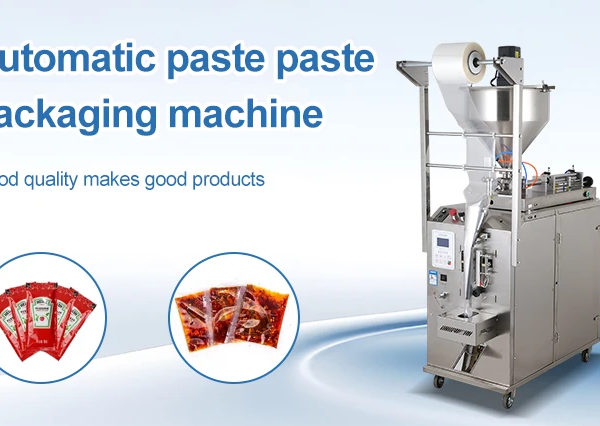
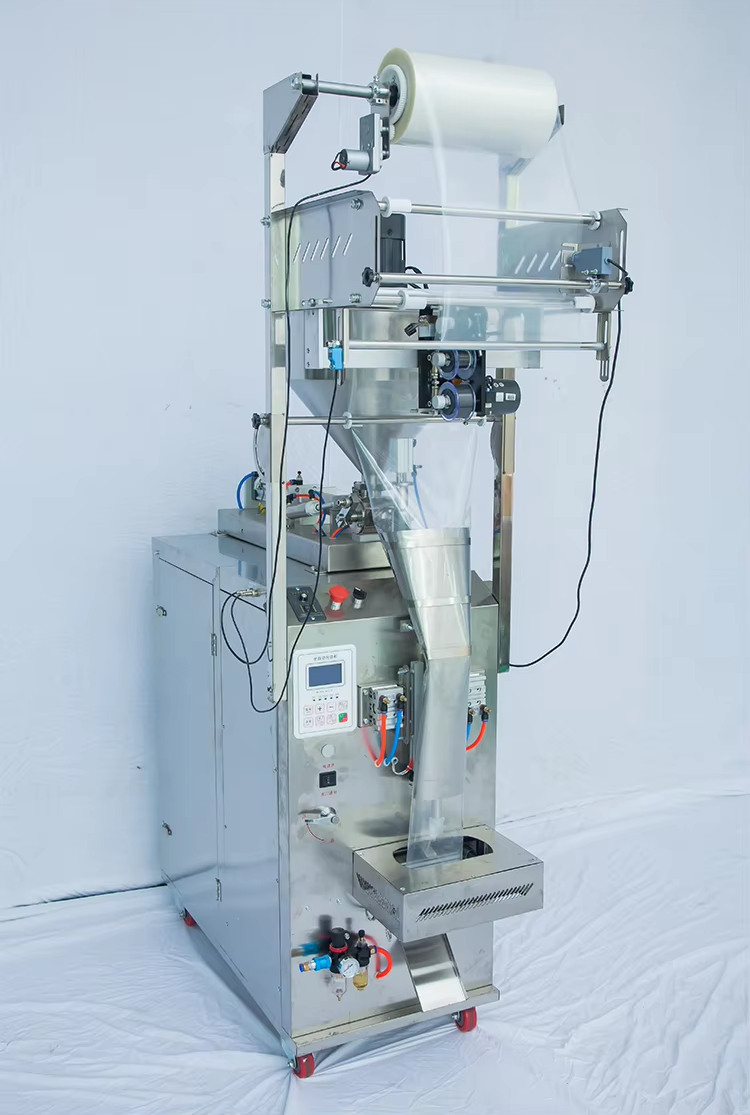
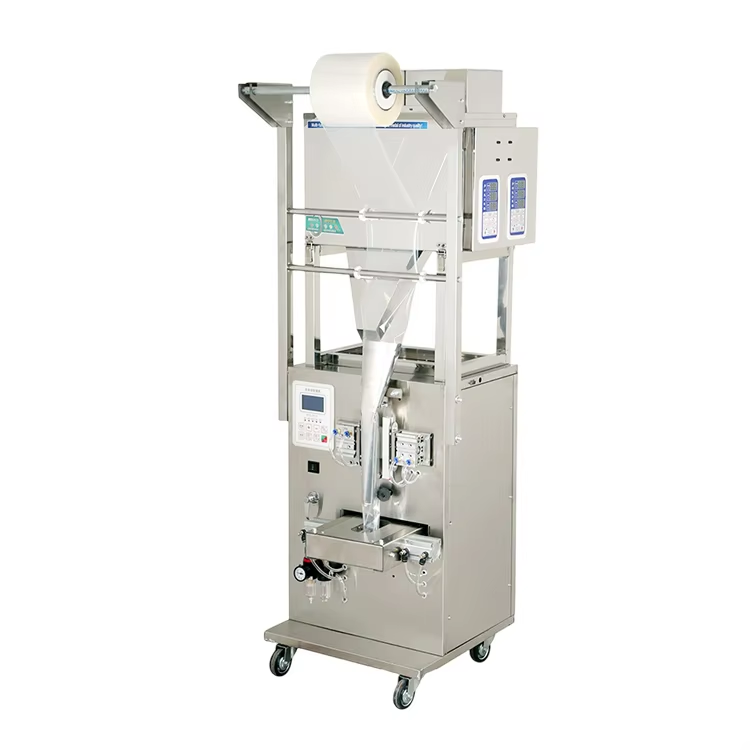
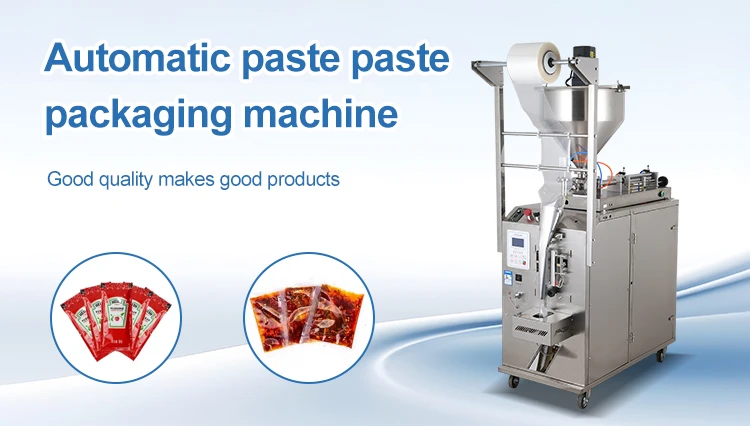
A paste packaging machine is a specialized filling and sealing machine designed for high‑viscosity products that do not flow easily. It handles materials like sauce, jam, honey, tomato paste, chili paste, peanut butter, cream, lotion, shampoo, toothpaste, and ointments. It automatically fills these thick products into sachets, pouches, or tubes, then seals them – ready for sale.
What is paste?
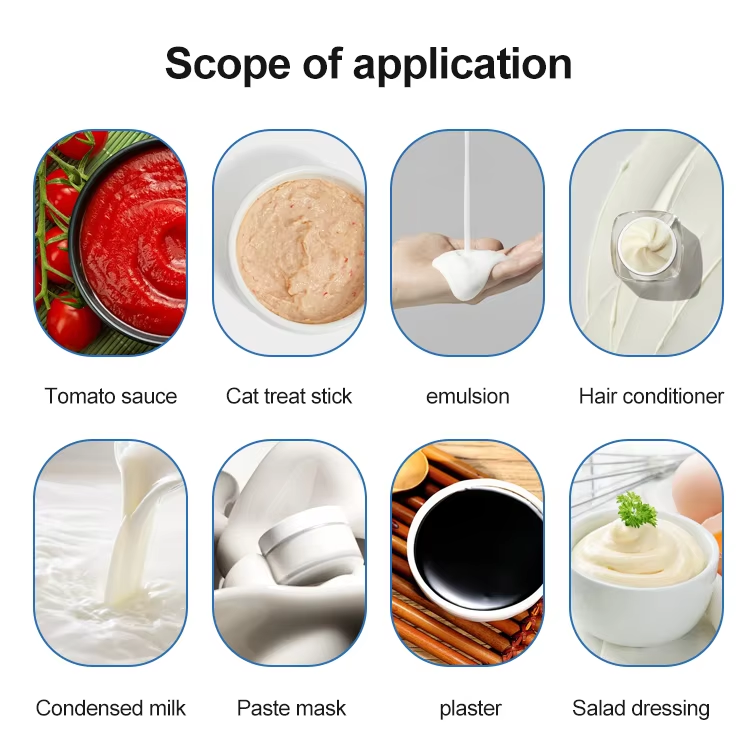
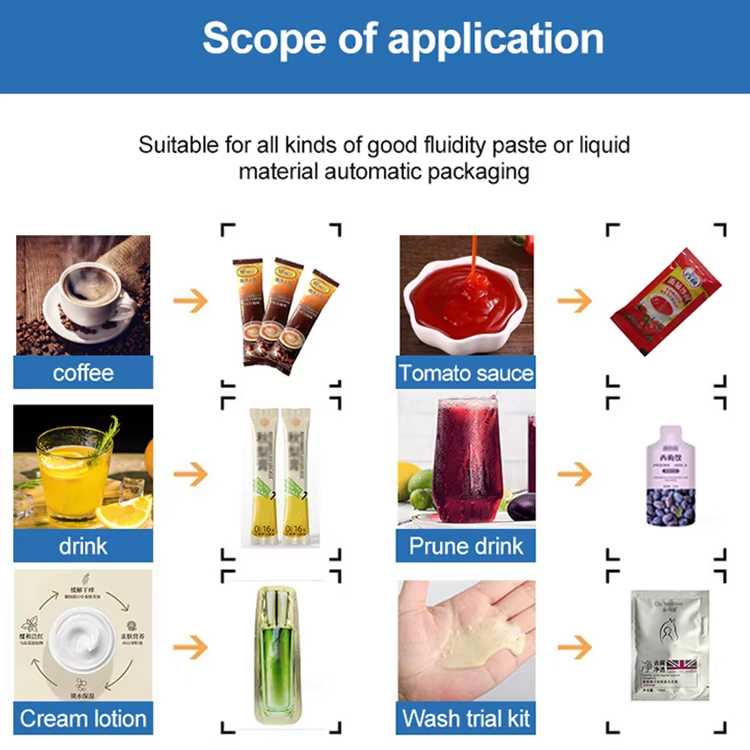
In packaging, “paste” means any semi‑solid, thick, viscous product. Examples: tomato paste, chili sauce, jam, honey, peanut butter, ketchup, cream, lotion, shampoo, toothpaste, ointment, and gel.
Key features for paste products
-
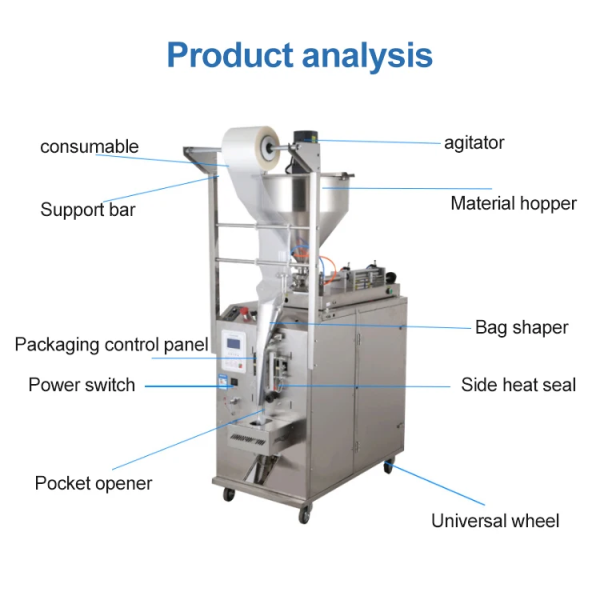
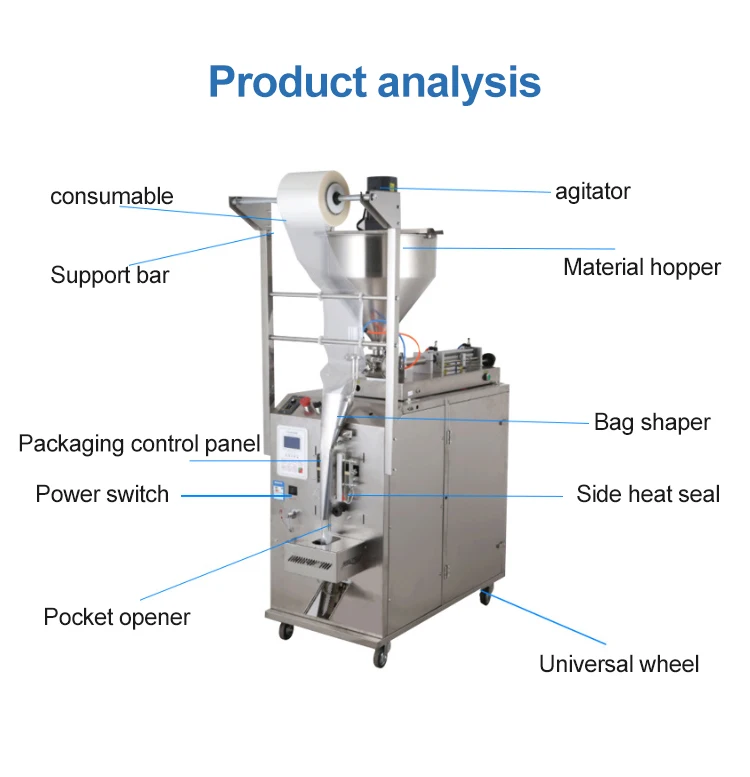
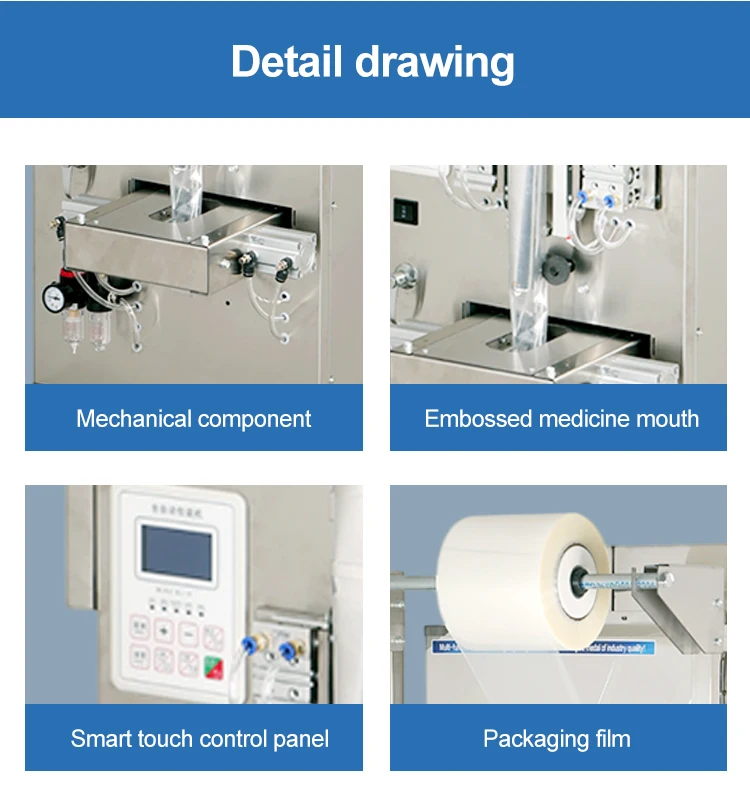
Piston (cylinder) filler – provides accurate, consistent doses even for thick pastes.
-
Stainless steel contact parts – food grade, corrosion resistant.
-
Heated hopper (optional) – keeps paste flowing (for products like honey or chocolate that thicken when cool).
-
Agitator / stirrer – prevents settling or separation of solids.
-
Nozzle with anti‑drip – prevents messy tails after filling.
-
PLC + touch screen control – easy to adjust fill volume, speed, temperature.
-
Filling range – typically 1 – 500 ml per sachet/pouch.
Typical applications by industry
| Industry | Products |
|---|---|
| Food | Tomato paste, chili sauce, soy sauce (thick), oyster sauce, jam, honey, peanut butter, chocolate spread, cooking oil, condensed milk, salad dressing, mayonnaise |
| Cosmetic | Cream, lotion, shampoo, shower gel, conditioner, facial cleanser |
| Pharmaceutical | Toothpaste, ointment, medical gel, oral liquid, eye drops (viscous) |
| Other | Glue, adhesive, sealant, paint (small samples), lubricant |
Types of packaging
This machine can produce several bag styles:
-
3-side seal sachet – most common, simple and cheap.
-
4-side seal sachet – stronger seal, better for liquids.
-
Back seal sachet – pillow‑style, often used for stick packs.
-
Stick pack – long narrow bag for single‑serve honey, ketchup, coffee.
-
Stand‑up pouch – with bottom gusset, can stand on shelf.
-
Spout pouch – with a nozzle, for easy dispensing.
How to choose the right paste packaging machine
-
Product viscosity – thin liquids need different valves than thick pastes. Piston fillers suit both.
-
Packaging type – sachet, pouch, stick pack, or tube? Each needs different forming system.
-
Fill volume – 1–5 ml (sample pack) or 100–500 ml (family size)?
-
Bag speed – how many bags per minute? Manual or automatic?
-
Material properties – does it contain particles (seeds, pulp)? Does it need heating?
-
Bag style – 3-side seal is cheapest and fastest. 4-side seal is stronger. Stand‑up pouch is more expensive but better for retail.
-
Budget – semi‑automatic models ~$2,000–5,000; fully automatic models ~$8,000–25,000.
Installation & operation requirements
-
Flat, stable floor.
-
Power: 220V or 380V (single or three phase).
-
Clean, dry environment.
-
Film roll: standard heat‑seal film (polyethylene, polypropylene, aluminum foil laminate).
Maintenance tips
-
Clean filler piston and nozzles after every batch (especially for food products).
-
Flush the system with warm water or cleaning solution if switching products.
-
Check sealing jaws daily – remove residue.
-
Lubricate moving parts monthly.
-
Replace seals and gaskets when they start leaking.
Why choose paste packaging?
-
Product protection – sealed bags prevent contamination and drying.
-
Convenience – easy to open, use, and store.
-
Branding – printed film enhances product appearance.
-
Portion control – perfect for single‑serve portions.
-
Cost effective – bags cost less than jars, bottles, or tubes.
Why buy from us?
-
CE certified, food‑grade stainless steel.
-
Piston filler with accuracy ±1%.
-
Hopper with agitator and optional heating.
-
Free testing with your product samples.
-
12 months warranty, spare parts in stock, lifetime support.
A paste packaging machine turns bulk paste into attractive, sellable packs. Whether you pack ketchup, honey, cream, or toothpaste, it gives you speed, accuracy, and professional results.
Inquiry
Please feel free to submit your inquiry information to us. We will contact with you as soon as possible.