
Your position:
PRODUCTS LIST
Last News
Inquiry
Introduction
Product Description:
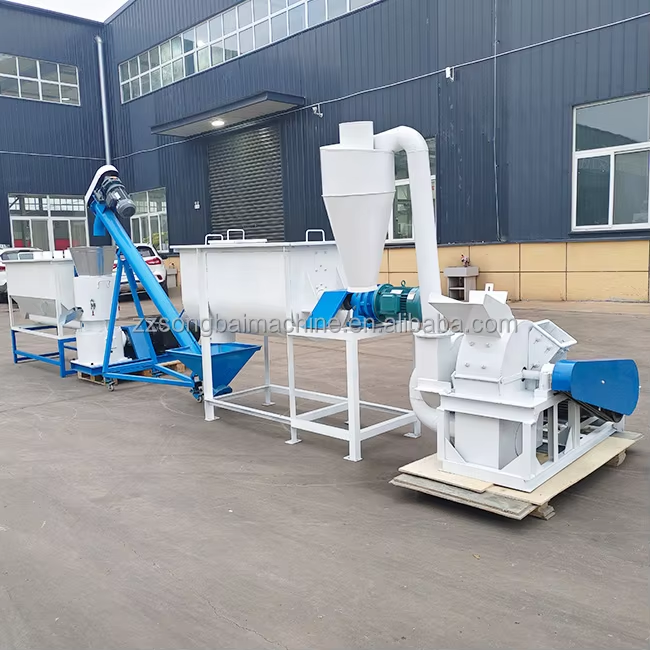
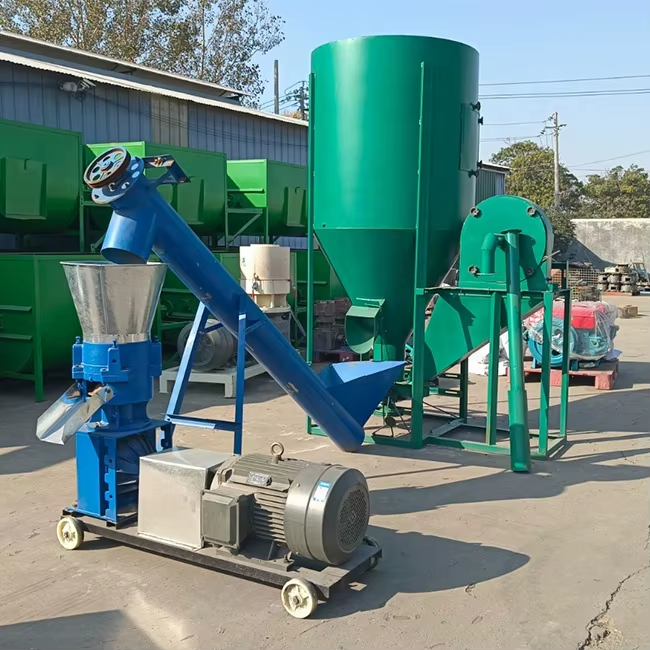
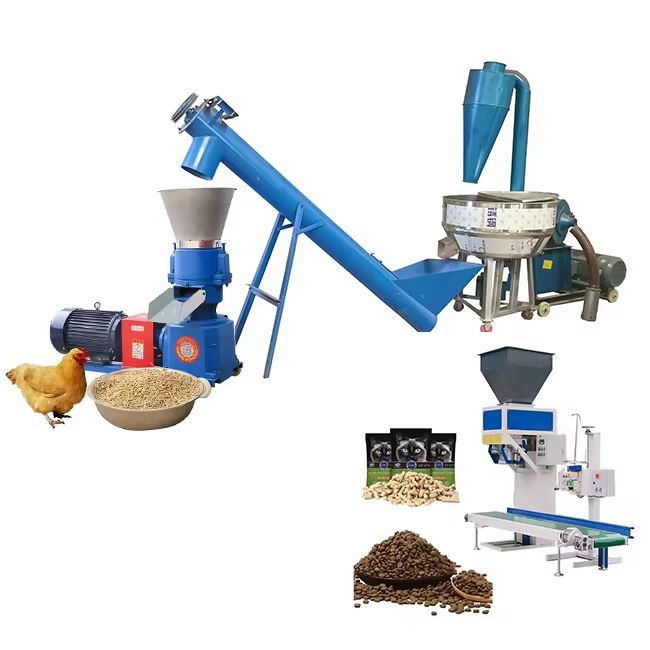
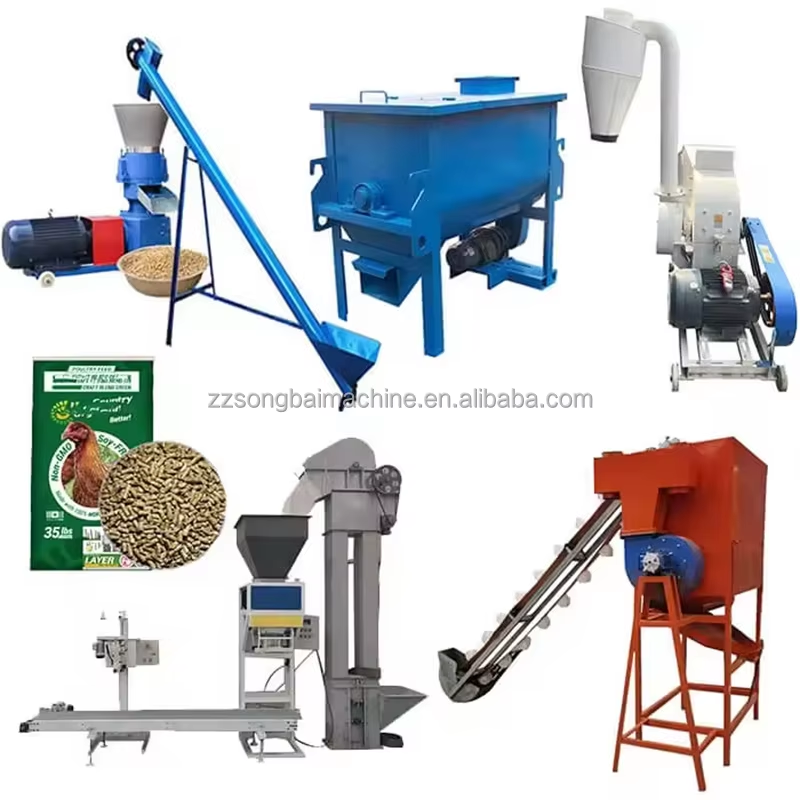
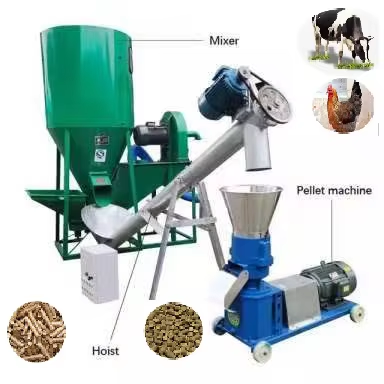
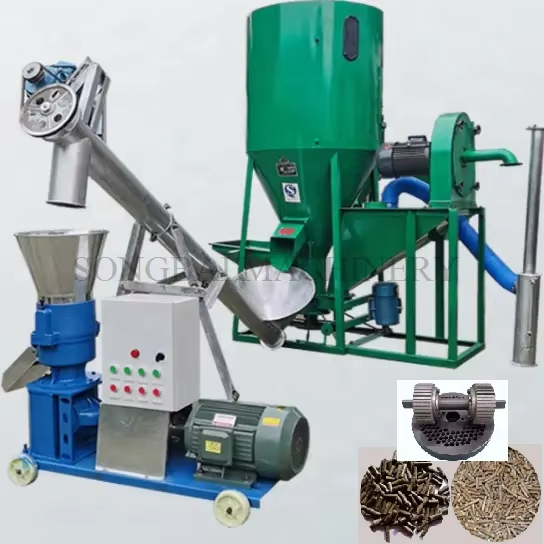
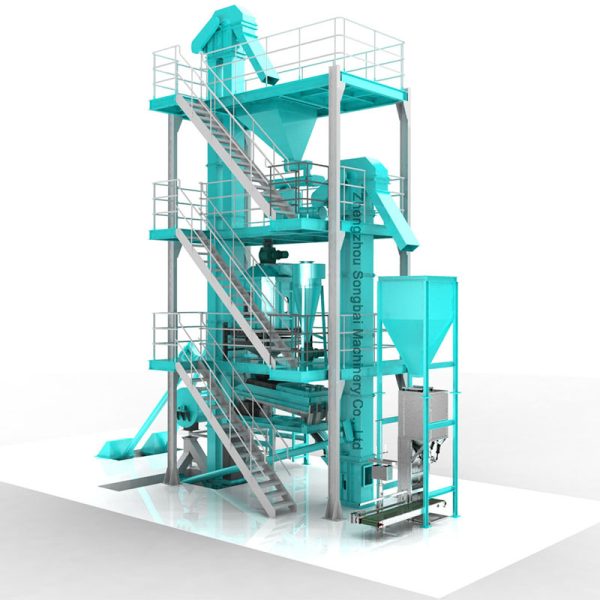
A feed pellet production line is a complete system that processes powdered raw materials into finished animal feed pellets. It integrates multiple machines – from raw material grinding to final packaging – into one continuous, automated production flow.
What It Produces
| Feed Type | Target Animals |
|---|---|
| Poultry feed | Chickens, ducks, turkeys |
| Pig feed | Piglets, growers, sows |
| Cattle feed | Dairy cows, beef cattle |
| Fish feed | Tilapia, catfish, shrimp |
| Sheep & goat feed | Lambs, adults |
Production Line Process Flow
The complete line typically includes these stages:
| Stage | Equipment | Function |
|---|---|---|
| 1. Grinding | Hammer mill / Grinder | Crushes raw materials into fine powder |
| 2. Mixing | Ribbon / paddle mixer | Blends all ingredients uniformly |
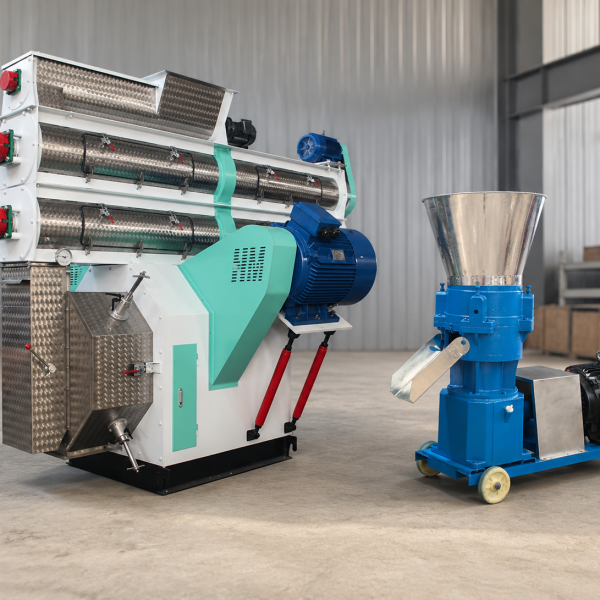
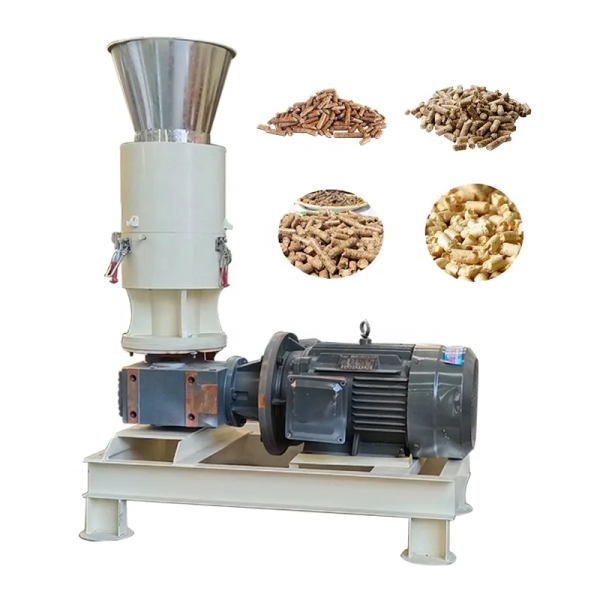
| 3. Pelleting | Ring die pellet mill | Compresses powder into hard pellets |
| 4. Cooling | Counterflow cooler | Reduces pellet temperature & moisture |
| 5. Crumbling (optional) | Crumblers | Breaks large pellets into smaller sizes |
| 6. Screening | Vibrating screener | Removes fines and broken pellets |
| 7. Coating (optional) | Coating machine | Adds oil, molasses, or other coatings |
| 8. Packaging | Packing scale + sewing machine | Bags finished pellets for storage/sale |
Key Features
-
Complete integration – all equipment works together in a continuous flow
-
High efficiency – automated operation with minimal manual labor
-
Consistent quality – uniform pellet size, hardness, and nutrition
-
Flexible output – adjustable pellet size (2–12mm) for different animals
-
Durable construction – heavy-duty steel, long service life
-
Customizable – can be designed for different capacities and feed types
Equipment Package (Standard Setup)
| Equipment | Function | Typical Model |
|---|---|---|
| Hoist / Bucket elevator | Elevates raw materials | Vertical or bucket type |
| Grinder / Hammer mill | Grinds grains and meals | 7.5–90kW |
| Mixer | Blends ingredients uniformly | 100–2000kg/batch |
| Ring die pellet mill | Pellets the mixed feed | 22–160kW |
| Cooler | Cools hot pellets | Counterflow type |
| Packing scale + sealer | Bags finished pellets | 5–50kg/bag |
Typical Applications by Line Size
| Scale | Capacity | Best For |
|---|---|---|
| Small / Farm scale | 1–2 t/h | Small farms, family business, local feed supply |
| Medium / Commercial | 3–5 t/h | Feed mills, cooperative, medium livestock farm |
| Large / Industrial | 8–20 t/h | Large feed mills, commercial feed production |
Technical Specifications (Typical Models)
| Parameter | Small Line | Medium Line | Large Line |
|---|---|---|---|
| Capacity | 1–2 t/h | 3–5 t/h | 8–20 t/h |
| Pellet size | 2–12 mm | 2–12 mm | 2–12 mm |
| Power | 30–60 kW | 80–150 kW | 250–500 kW |
| Area required | 100–200 m² | 300–500 m² | 800–1500 m² |
| Operators | 2–3 | 3–4 | 4–6 |
How to Choose the Right Feed Pellet Production Line
-
Capacity – how many tons per hour do you need? Choose a line size that matches your production goals.
-
Feed type – poultry, pig, cattle, fish, or all? Different animals need different pellet sizes and formulations.
-
Raw materials – what ingredients are available locally? This affects equipment selection.
-
Automation level – manual, semi-automatic, or fully automatic? Higher automation reduces labor.
-
Budget – small lines start around $15,000–30,000; commercial lines $80,000–200,000+.
-
Space – ensure you have enough floor space for all equipment and material flow.
-
After-sales support – choose a supplier that offers installation, training, and spare parts.
Why Invest in a Feed Pellet Production Line?
-
Lower feed cost – produce your own feed at 20–40% lower cost than buying commercial pellets.
-
Quality control – exactly control what goes into your feed.
-
Consistent nutrition – pellets ensure animals get balanced nutrients.
-
Convenient storage – pellets take less space than powder and do not cake.
-
Less waste – pellets reduce feed spillage and selective eating.
-
Scalable – start small and expand your line as your business grows.
Maintenance Tips
-
Perform daily cleaning of the pellet mill die and rollers.
-
Lubricate all bearings and gearboxes according to schedule.
-
Regularly check hammer wear and screen condition in the grinder.
-
Monitor belt tension on elevators and conveyors.
-
Calibrate the packing scale monthly.
-
Keep a stock of critical spare parts (die, roller shells, hammers, screens).
Why Buy from Us?
-
Over 15 years of experience in feed machinery
-
CE and ISO certified quality assurance
-
Turnkey solutions – we design, supply, install, and train
-
Factory-direct pricing, no middleman
-
Spare parts available at all times
-
Free layout design and project consultation
A feed pellet production line is a complete solution for making high-quality animal feed. Whether you need a small farm line or a large commercial plant, we provide reliable equipment, professional support, and long-term value. Contact us for a free layout design and factory-direct quote.
Inquiry
Please feel free to submit your inquiry information to us. We will contact with you as soon as possible.
Related products
-
 Full Automatic Feed Production Line
 -
 Feed Pellet Production Line
 -
1. Support customization
2. Support EXW, FOB, CIF, DDU, DDP terms
3. Support bank wire transfer, online order, PayPal, visa, Pay Later, Pix, Oxxo, Alipay, Wechat Pay
4. 3-5 days delivery
5. 1 year warrantyRing Die Feed Production Line -
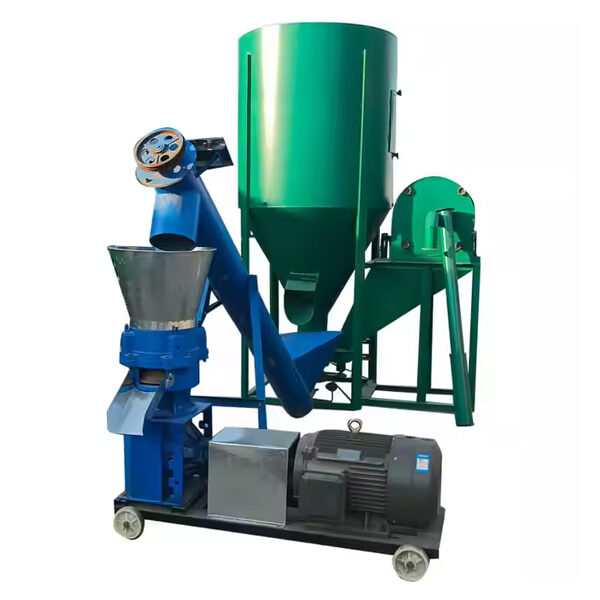 300-1000kg/h Feed Production Line